
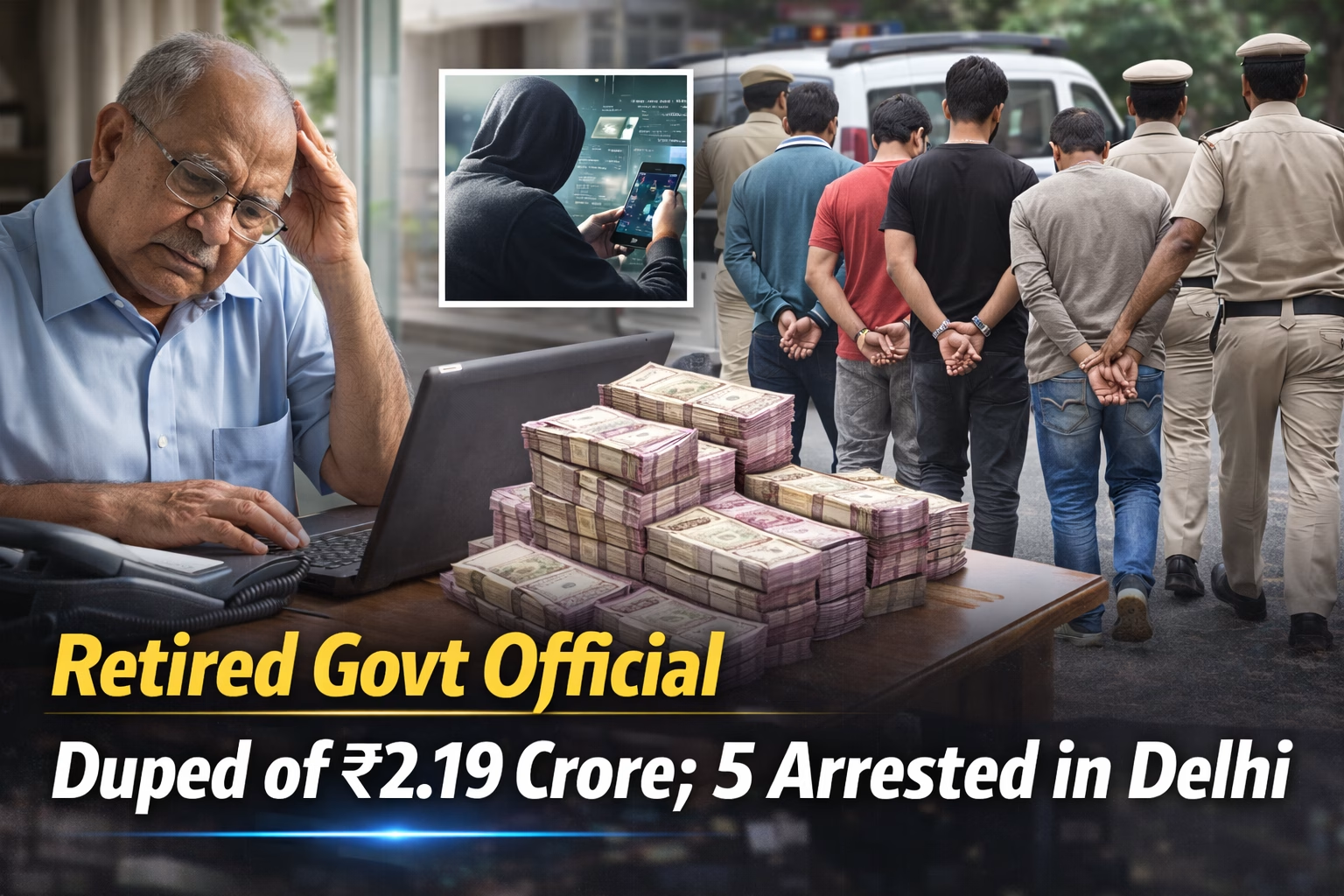
Background and Timeline: The Intelligence Fusion and Strategic Operations (IFSO) unit of Delhi Police concluded a major investigation in mid-January 2026, resulting in five arrests. The case involved a 78-year-old retired official who was targeted in a systematic month-long ordeal starting in November. The syndicate was found to be part of a massive transnational operation headquartered in Cambodia.
Modus Operandi: Fraudsters impersonating “Sumit Mishra” from Lucknow Police told the victim that two arrest warrants in a money laundering case were pending against him. The scammers placed him under a “digital arrest,” keeping him under 24/7 WhatsApp video surveillance and instructing him not to leave his house or contact family. A fake CBI office setup with an actor posing as a lawyer was used to demand asset details for “verification” purposes before siphoning the funds.
Victims and Financial Impact: The 78-year-old retired government official was coerced into transferring a total of ₹2,19,18,000 into multiple accounts between November 26 and December 4. This case is the second major digital arrest in South Delhi within a week, highlighting a spike in targeting high-net-worth senior citizens. The fraudsters even directed the victim to physically visit the bank to complete large RTGS transfers.
Investigation and Agencies Involved: DCP (IFSO) Vineet Kumar led the specialized team that tracked the money trail to operatives in Madhya Pradesh and Uttar Pradesh. The UP Special Task Force (STF) simultaneously arrested the mastermind, Suresh Kumar Sain, at Delhi’s international airport as he returned from Cambodia. They utilized technical surveillance to link the local account holders to international handlers operating via Telegram and WhatsApp.
Arrests and Suspects: Five individuals were arrested: Dipesh Patidar (who held ₹1 crore in cash), Anshul Rathod, Shyam Babu Gupta, Raghvendra Verma, and Devesh Singh, a first-year B.Tech student. Mastermind Suresh Kumar Sain, a school dropout from Rajasthan, was apprehended with Cambodian employee cards and international SIMs. These arrests reveal a “hybrid” syndicate where local youth act as boots on the ground for offshore handlers.
Broader Implications and Trends: The involvement of local university students like Devesh Singh as ground operatives for Southeast Asian syndicates marks a disturbing trend in domestic recruitment. The case confirms that nearly 46% of Indian digital frauds are now traced back to Myanmar, Laos, and Cambodia. It underscores the national crisis of “cyber slavery,” where individuals are lured abroad and forced to run these fraud operations against their own countrymen.