
Background and Timeline
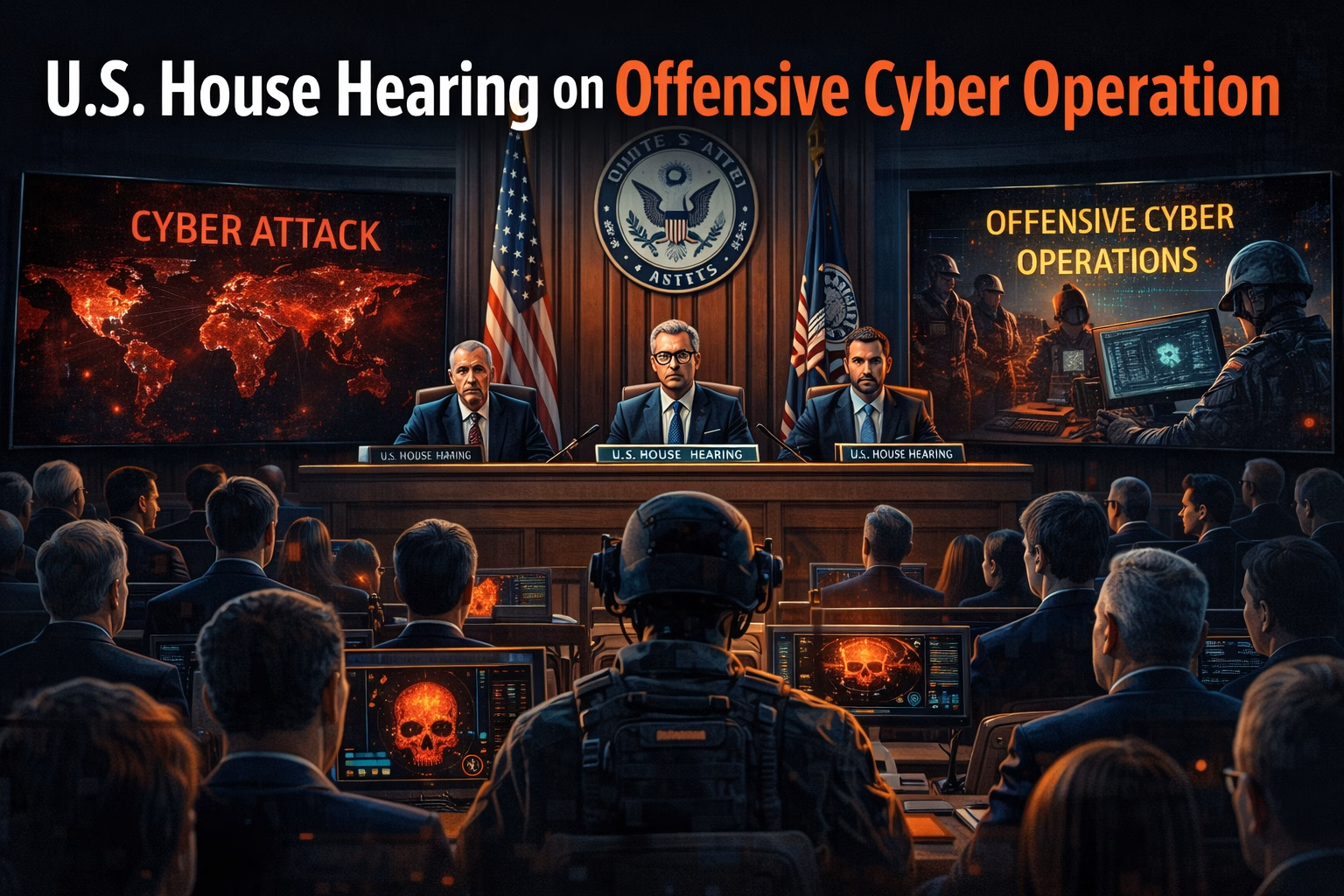
On 13 January 2026, the US House Homeland Security Subcommittee on Cybersecurity and Infrastructure Protection held a hearing titled “Defense through Offense: Examining U.S. Cyber Capabilities to Deter and Disrupt Malign Foreign Activity Targeting the Homeland.” The hearing was convened in response to a series of high-profile cyber intrusions by state-sponsored actors, particularly from China, Russia, and Iran, targeting US critical infrastructure.
Modus Operandi (Discussion Focus)
The hearing focused on the need for the United States to adopt a more proactive and offensive posture in cyberspace. Experts and officials argued that current US cyber strategy is overly defensive, constrained by bureaucratic red tape and legal limitations, while adversaries operate with greater agility and state backing. The panel discussed integrating offensive cyber operations into military doctrine, leveraging artificial intelligence, and fostering public-private partnerships to enhance national cyber resilience.
Victims and Financial Impact
The context for the hearing includes recent cyberattacks on US infrastructure, government agencies, and private sector entities, resulting in significant financial losses, operational disruptions, and threats to national security. The lack of effective deterrence has emboldened adversaries, increasing the frequency and severity of attacks.
Investigation and Agencies Involved
The hearing featured testimony from leading cybersecurity experts, including Frank Cilluffo (Auburn University), Emily Harding (CSIS), Joe Lin (Twenty Technologies), and Drew Bagley (CrowdStrike). The discussion emphasized the need for a dedicated US CyberForce, improved recruitment and training, and the integration of offensive capabilities across government and industry. Congress has allocated $1.25 billion to support these initiatives, reflecting bipartisan recognition of the cyber threat landscape.
Arrests and Suspects
While the hearing did not focus on specific arrests, it underscored the importance of holding adversaries accountable through targeted offensive operations. The panel cautioned against “hack back” schemes by private entities, advocating for professional, government-led responses to avoid escalation and collateral damage.
Broader Implications and Trends
The hearing marks a strategic shift in US cyber policy, signaling a move toward active deterrence and disruption of hostile cyber actors. The creation of a US CyberForce, increased investment in AI-driven operations, and enhanced international cooperation are expected to reshape the global cyber landscape. The proceedings also highlight the challenges of