
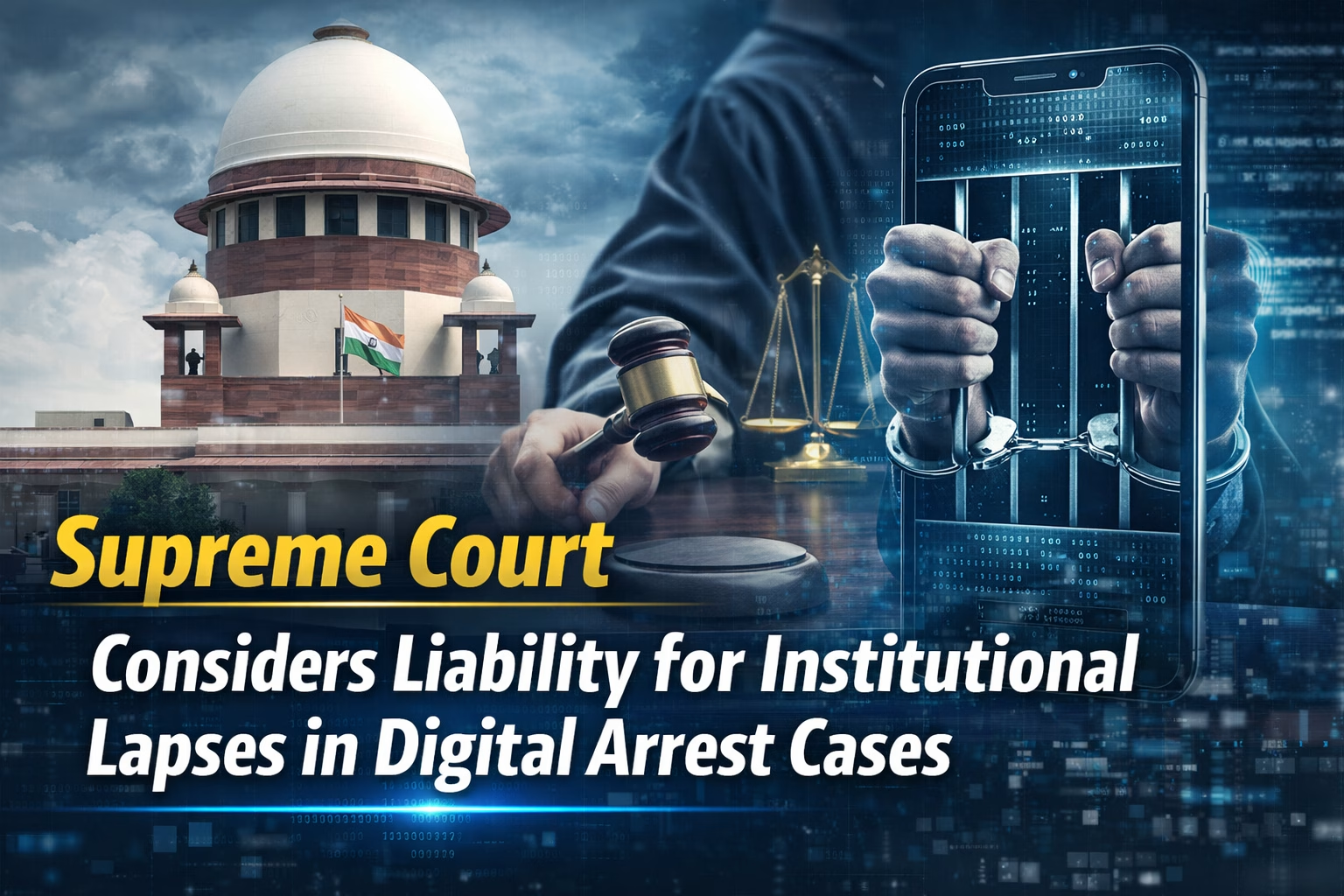
Background and Timeline: In January 2026, the Ministry of Home Affairs (MHA) informed the Supreme Court that an inter-departmental committee (IDC) is examining the liability of financial intermediaries in cyber fraud. The committee was formed after the Supreme Court took suo motu cognisance of the exponential rise in digital arrest scams targeting senior citizens. The first high-level meeting of this committee was held on December 29, 2025, to identify systemic gaps.
Modus Operandi: The court noted that institutional lapses, such as the negligent issuance of multiple SIM cards to single individuals and the lack of real-time alerts for suspicious transfers, enable these scams. The Chief Justice observed that banks may be held liable for a “deficiency of service” if they fail to implement early-warning systems to alert account holders of high-volume siphoning. Proposals include banning the over-the-counter sale of “SIM boxes” that allow scammers to mask their identity by using hundreds of numbers.
Victims and Financial Impact: The MHA reported to the court that approximately ₹3,000 crore has been defrauded from Indian citizens through digital arrest scams based on reported complaints. The bench described the scale of such frauds as “shocking” and a “national threat” that requires an iron hand to tackle. Victims often face a silent epidemic of humiliation and stigma, leading many to under-report their losses.
Investigation and Agencies Involved: The IDC is chaired by the Special Secretary (Internal Security), MHA, and includes representatives from the RBI, CBI, MeitY, DoT, and Ministry of Law. The committee meets every two weeks to coordinate real-time solutions with online intermediaries like Google and WhatsApp. Senior advocate N.S. Nappinai has been appointed as amicus curiae to guide the court on international best practices for victim compensation.
Arrests and Suspects: While the committee focuses on policy, the court has directed the CBI to spearhead the unified probe into cross-border syndicates operating from “scam compounds” in Southeast Asia. The court has also directed states and union territories to strengthen regional cyber units to ensure a coordinated national defense. Legal action is being considered against bank employees who intentionally assist in the opening of mule accounts.
Broader Implications and Trends: This represents a landmark judicial shift toward holding institutions accountable for “regulatory non-compliance” that leads to victim suffering. The IDC has agreed in principle that victim compensation should be provided where loss is attributable to negligence by banks or telecom providers. It marks a major step in reshaping India’s legal response to digital crime toward a victim-centric model.