
Background and Timeline: The investigation was initiated following a formal complaint by PVN Prasad, a 70-year-old senior advocate and resident of Badvel town in Kadapa district. The victim reported being subjected to an intense period of extortion between September 8 and December 4, 2025, which ultimately led to a massive financial loss. The Kadapa police successfully dismantled the syndicate’s financial backbone on January 14, 2026, after conducting intensive cyber forensic, banking, and telecom analysis.
Modus Operandi: The syndicate operated a “Digital Arrest 2.0” model, impersonating high-ranking police and central agency officials through continuous WhatsApp video monitoring. They utilized psychological intimidation, forged Supreme Court documents, and false criminal narratives involving non-bailable warrants to create a fear psychosis. The extorted funds were routed through a complex multi-layered mule account chain before being laundered through cryptocurrency exchanges and private wallets to anonymize the trail.
Victims and Financial Impact: The primary victim, advocate PVN Prasad, was defrauded of exactly ₹72,68,039 over a period of three months. During the investigation, authorities identified and froze a broader financial ecosystem exceeding ₹22 crore linked to the syndicate’s key mule operators. This freezing action significantly crippled the operational capacity of the network across multiple states.
Investigation and Agencies Involved: Under the direct supervision of Kadapa SP Shelke Nachiket Viswanath and DSP G Rajendra Prasad, special teams from the Kadapa Cyber Crime Cell and Badvel police carried out the probe. The investigation combined intensive forensics with banking intelligence to trace the interstate movement of funds. Certificates of appreciation were awarded to the team for their professionalism in dismantling the financial infrastructure of the syndicate.
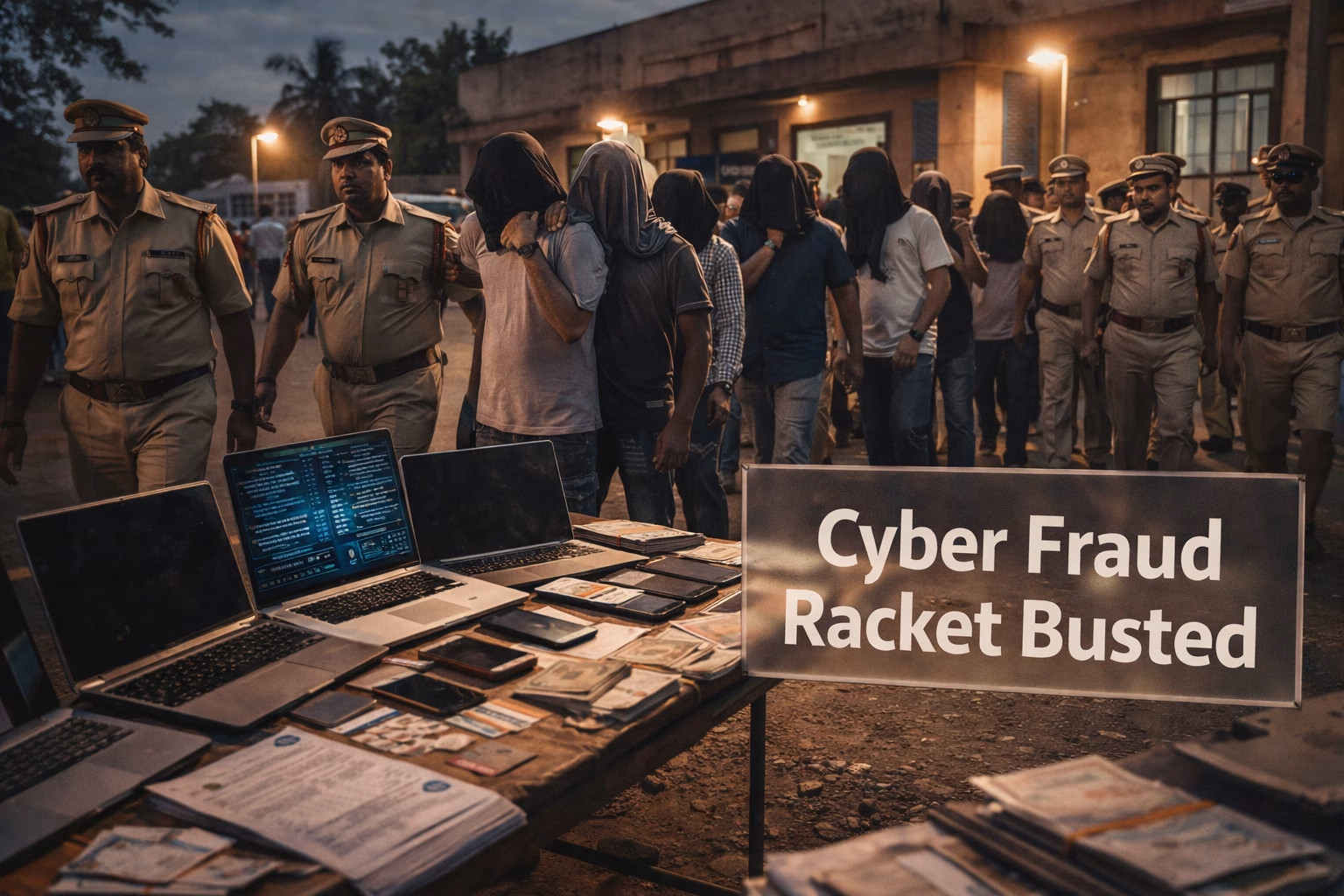
Arrests and Suspects: Nine suspects were apprehended at Hanuman Circle in Badvel, including five from Kerala and four from Andhra Pradesh. Key arrests included prime coordinator Haddhad Koya and impersonation strategist Sahad Thaikandiyil, alongside mule aggregators like Gibson Gilbert and CP Prajit. Police seized ₹5.5 lakh in cash, 14 smartphones, multiple SIM cards, and a Honda Amaze car used for the operation.
Broader Implications and Trends: Kadapa Police have declared “digital arrest” a fraudulent concept, clarifying that no legitimate government agency conducts arrests or legal inquiries via video calls. The case highlights a professionally-run criminal enterprise that weaponizes psychological warfare against senior citizens and experienced professionals. Authorities have urged citizens to disconnect suspicious calls immediately and report any such incidents via the 1930 national helpline.