
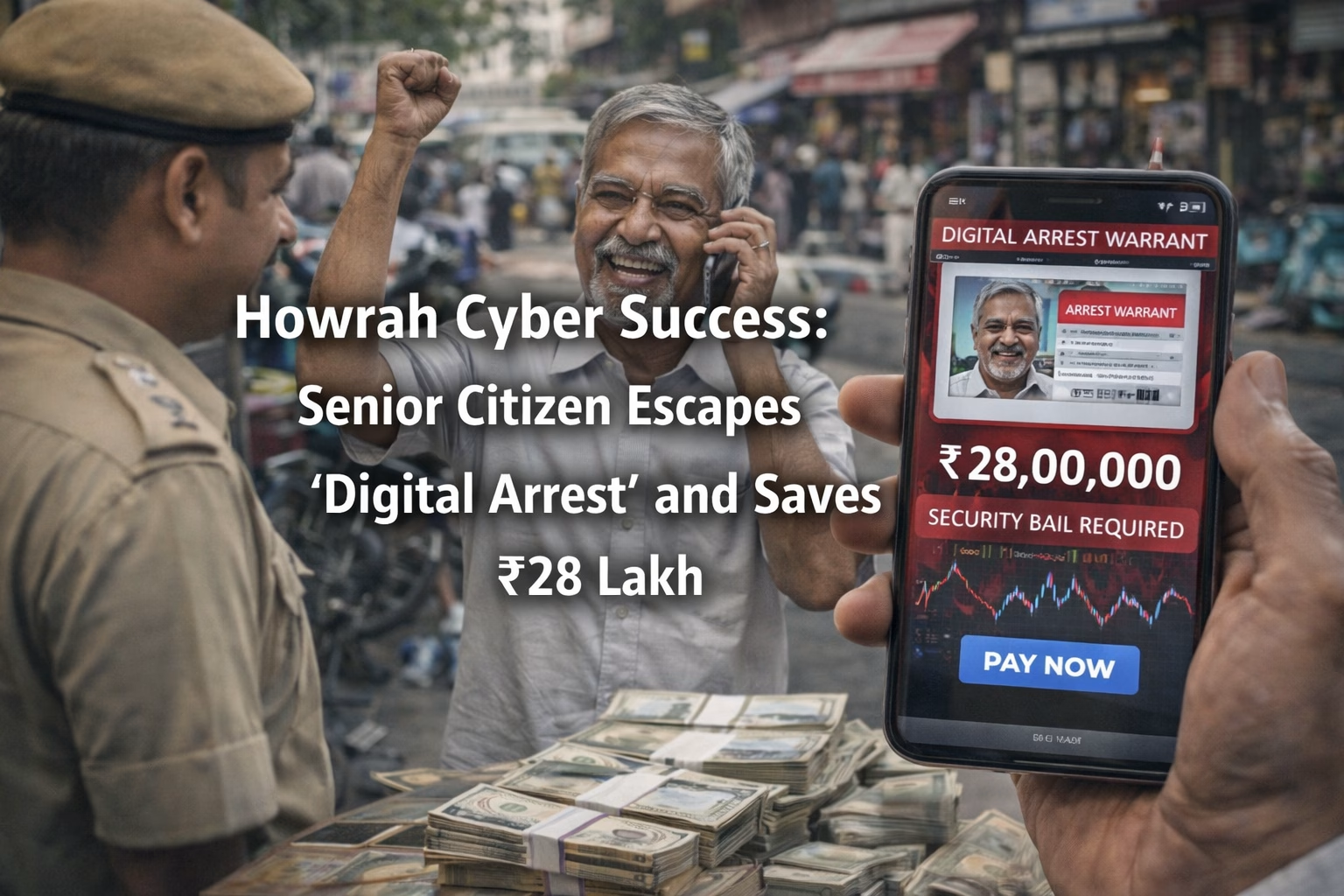
Background and Timeline: A 65-year-old retired employee of the Kolkata Municipal Corporation achieved a rare victory against a “digital arrest” syndicate on Wednesday, January 28, 2026. The ordeal began on January 20 when the victim received a call alleging his mobile number was linked to serious crimes in Maharashtra. This high-tension case concluded on Friday with a successful intervention by the Howrah City Police Cyber Crime unit.
Modus Operandi: Fraudsters impersonating Mumbai Crime Branch officers kept the victim under a 24/7 video call for eight days, enforcing a “digital arrest” through constant psychological pressure. They shared forged documents and claimed the case had reached the Supreme Court to convince the victim to liquidate his assets for “official verification.” The syndicate monitored his movements via the video call, effectively preventing him from contacting his family or seeking external help.
Victims and Financial Impact: The senior citizen was coerced into breaking his fixed deposits at three separate banks, moving approximately ₹28 lakh into his savings account in preparation for a final transfer. However, the victim managed to save the entire ₹28 lakh by leaving his mobile phone at home during the video call and rushing to the nearby Malipanchghara police station. This quick thinking prevented a life-shattering financial loss and allowed police to intervene before the transfer was executed.
Investigation and Agencies Involved: The Howrah Cyber Crime team and local officers from the Malipanchghara police station executed an immediate technical response upon the victim’s arrival. They quickly removed the victim’s SIM card to break the fraudsters’ access and changed the UPI details for all three of his bank accounts in real-time. Investigators have stated that the gang was likely operating from a base in Cambodia, utilizing advanced voice-spoofing technology to mimic police authority.
Arrests and Suspects: While the masterminds remain at large in Southeast Asia, the Howrah police have registered a case against the unknown callers for criminal impersonation and extortion. Technical experts are currently analyzing the metadata of the video calls and the bank accounts provided by the fraudsters to identify local “collection mules.” The investigation has also revealed links to another digital arrest case in Salt Lake where a professor lost ₹35 lakh.
Broader Implications and Trends: This case highlights the “Isolation Tactic” used in digital arrests, where scammers act as “virtual jailers” to keep victims away from rational advice. It serves as a powerful reminder that “real-time reporting” to a physical police station is the most effective way to break the psychological grip of these syndicates. Authorities have urged citizens to remember that no legitimate agency will ever demand a financial transfer via a video call or a “secret investigation.”