
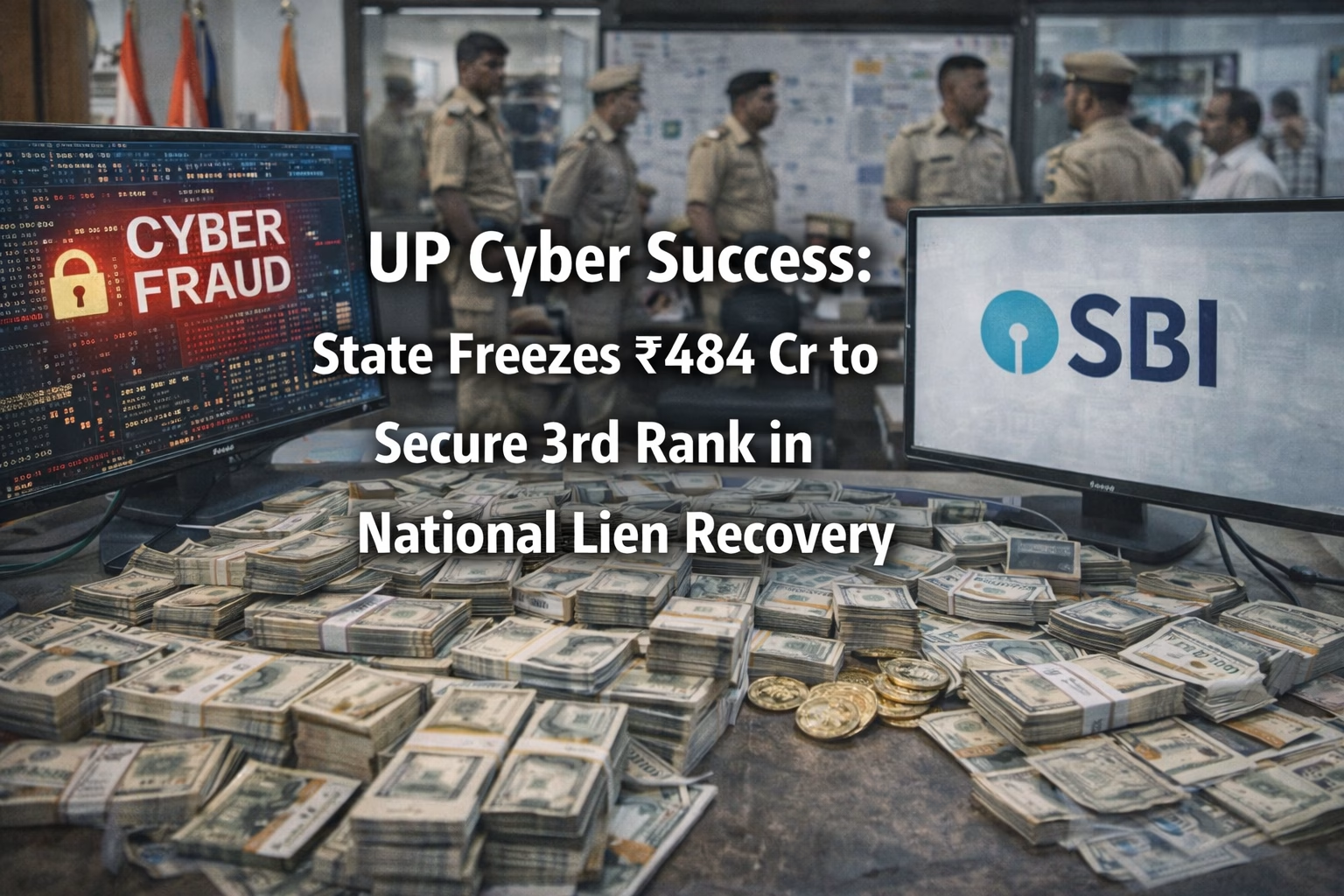
Background and Timeline: The Uttar Pradesh Police achieved a major milestone in cybercrime prevention, reaching the third rank nationally in “lien percentage” as of February 5, 2026. The data, sourced from the National Cyber Crime Reporting Portal (NCRP), indicates a rapid ascent for the state, which was previously ranked 24th. This success follows the implementation of ten core policing priorities established under the direct supervision of DGP Rajeev Krishna.
Modus Operandi: The state’s strategy focused on the “Automated Intervention” model, where reporting to the 1930 helpline triggers immediate digital locks across the banking ecosystem. By prioritizing “Real-Time Banking Coordination,” the UP Cyber Cell was able to freeze illicit proceeds before they could be withdrawn via ATM or siphoned through Hawala. The state also conducted over 500 massive cyber awareness camps to sensitize over one lakh citizens against the psychological triggers of fraud.
Victims and Financial Impact: The proactive measures resulted in exactly ₹484.45 crore of defrauded money being successfully frozen within the banking system during the current assessment period. This “lien marking” prevents the permanent loss of life savings for thousands of victims of digital arrest and investment scams. Officials noted that this strategic success has directly contributed to social stability by reducing the financial ruin often caused by high-value digital extortion.
Investigation and Agencies Involved: The UP Police Cyber Unit, under DGP Binod K. Singh, coordinated with the Indian Cyber Crime Coordination Centre (I4C) and 23 participating banks. A dedicated team of cyber experts was trained in every police station to improve the response time and the quality of digital forensic investigations. The state is also adding 30 more seats to its helpline centers to raise its call-handling capacity to over 9,000 inquiries per day.
Arrests and Suspects: While the ranking pertains to recovery efficiency, the associated enforcement actions have led to the identification and blocking of over 12.2 lakh SIM cards and 3 lakh IMEIs. The “Samanvaya” platform and “Pratibimb” modules were used to map the physical locations of active scammers for targeted raids. Thousands of local facilitators providing mule bank accounts have been arrested across various districts including Lucknow, Agra, and Meerut.
Broader Implications and Trends: UP’s success demonstrates that “speed of response” is the only effective defense against the automated fund-splitting scripts used by modern syndicates. It marks a transition from reactive policing to a “Systems-Based Defense” model that treats cybercrime as a material risk to internal security. Authorities reiterated that greed, negligence, addiction, and fear are the four primary factors driving the current cybercrime epidemic in the state.