
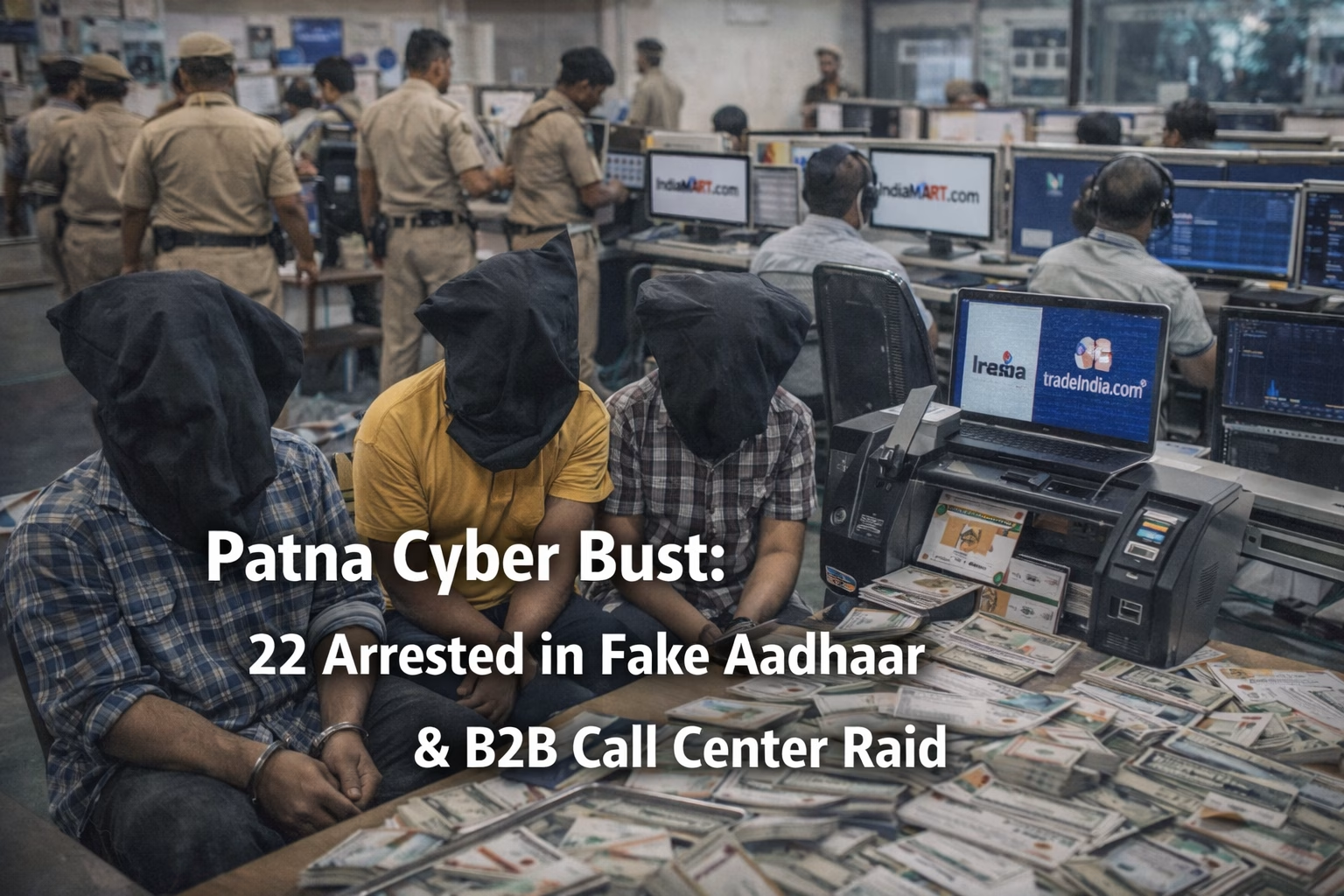
Background and Timeline: The Cyber Crime and Cyber Security Unit of Patna conducted a massive tactical raid on Monday, February 2, 2026, dismantling a coordinated fraud infrastructure. Acting on intelligence from the Economic Offences Unit (EOU), police struck three separate locations in the Saguna Mor and Rupaspur areas. The syndicate had been operating for an estimated 12 to 18 months under the guise of providing digital business services.
Modus Operandi: The gang operated “Fake Digital Service Centres,” primarily targeting owners of rural cyber cafes and small businesses. They utilized a tele-calling team, including 15 women, who were trained to build trust and persuade victims to pay for B2B services and “Aadhaar center registration”. Once the payment—typically ranging from registration fees to security deposits—was transferred via UPI, the fraudsters immediately blocked the victim’s contact numbers.
Victims and Financial Impact: Investigations suggest that the gang successfully cheated around 500 individuals, totaling a financial impact of approximately ₹1 crore over the last four years. The victims were mostly semi-literate entrepreneurs seeking to expand their services through government-fronted schemes. The seizure included 19 laptops, 53 mobile phones, and 12 ATM cards, indicating a high-volume operation capable of managing dozens of targets simultaneously.
Investigation and Agencies Involved: Cyber Police Station (Patna) DSP Sangeeta led the operation, coordinating with the EOU’s specialized data analytics team. The investigation involved tracking the siphoned money through 12 recovered ATM cards and auditing the “victim registers” found at the scene. Technical forensics are currently mapping the source of the “client database” which the gang reportedly stole from IRCTC and other public platforms.
Arrests and Suspects: A total of 22 individuals were arrested, including 15 women who served as the primary tele-callers for the syndicate. These women were reportedly paid a monthly salary of ₹8,000 to ₹10,000 to “bring in clients” through scripted deception. Seven men were also apprehended, including the regional coordinators, while a juvenile member of the gang was detained for separate processing under the JJ Act.
Broader Implications and Trends: This bust highlights the “Feminization of Tele-Fraud,” where syndicates hire women to create a false sense of security and trust among victims. it also underscores the persistence of “B2B Impersonation” where legitimate government initiatives like Aadhaar centers are used as bait. Authorities warned that any service provider demanding upfront “GST” or “Processing Fees” through a personal mobile call is almost certainly a fraudster.