
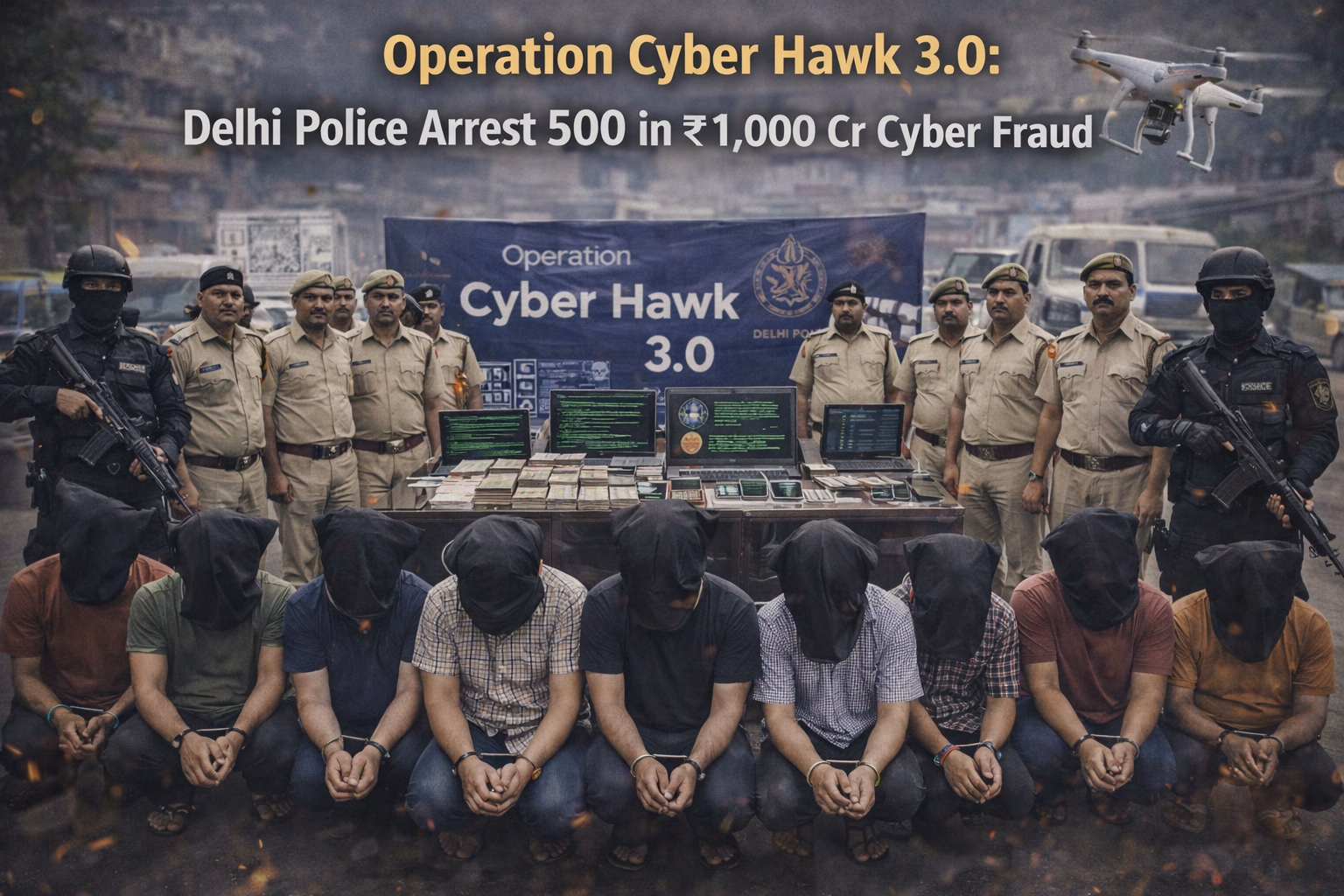
Background and Timeline: Announced on February 7, 2026, “Operation Cyber Hawk 3.0” represents the latest and most intensive phase of a strategic citywide offensive launched by the Delhi Police. This phase was triggered by the rapid reconstruction of digital crime infrastructure following two previous drives in late 2025 that had netted over 700 suspects. The operation was specifically timed to address a surge in fraudulent activity linked to the misuse of digital platforms during high-volume banking periods.
Modus Operandi: The operation targeted organized cyber fraud networks involved in cheating, phishing, and fake customer-care call centers that utilize hyper-personalized lures. Syndicates utilized advanced technical analysis and real-time intelligence mapping to identify high-value targets before deploying malicious online setups to steal digital payment credentials. A critical feature of this phase was the identification of high-tech pipelines that route defrauded Indian funds into international cryptocurrency wallets using heavily layered mule bank accounts.
Victims and Financial Impact: Preliminary forensic investigations into the modules busted during this phase and earlier phases uncovered suspicious transactions totaling approximately ₹1,000 crore. This massive financial volume highlights a large-scale ecosystem of cybercriminals operating from multiple locations to dilute detection risks. In one specific East District action, investigators traced 85 mule accounts that were linked to more than 600 unique complaints registered on the National Cyber Crime Reporting Portal (NCRP).
Investigation and Agencies Involved: The Delhi Police Crime Branch served as the primary investigative lead, coordinating with the Intelligence Fusion and Strategic Operations (IFSO) unit and the I4C ‘Samanvya’ portal. Investigative teams employed sophisticated digital forensics, including call detail record (CDR) analysis and IP address tracking, to uncover the hidden links between local operatives and their financial handlers. The operation integrates financial analytics and trail mapping with simultaneous field raids across multiple digital platforms. Arrests and Suspects: More than 500 individuals were apprehended during this coordinated phase, enabling the swift identification of offenders and the disruption of fraudulent digital infrastructure. Key arrests include significant account facilitators like Mohd Wasim, who was found managing dozens of mule accounts to facilitate the laundering of cybercrime proceeds. Police also seized a massive cache of incriminating material, including ₹4.7 lakh in cash, 14 mobile phones, and 20 SIM cards.
Broader Implications and Trends: Operation Cyber Hawk 3.0 represents a definitive move toward “data-driven policing” that prioritizes the disruption of the financial lifelines of organized fraud. By focusing on “mule account networks” rather than just individual callers, authorities are attempting to permanently cripple the economic ROI of cyber syndicates. The campaign reveals that domestic fraud operations are increasingly functioning as the “local front” for global cryptocurrency laundering networks.