
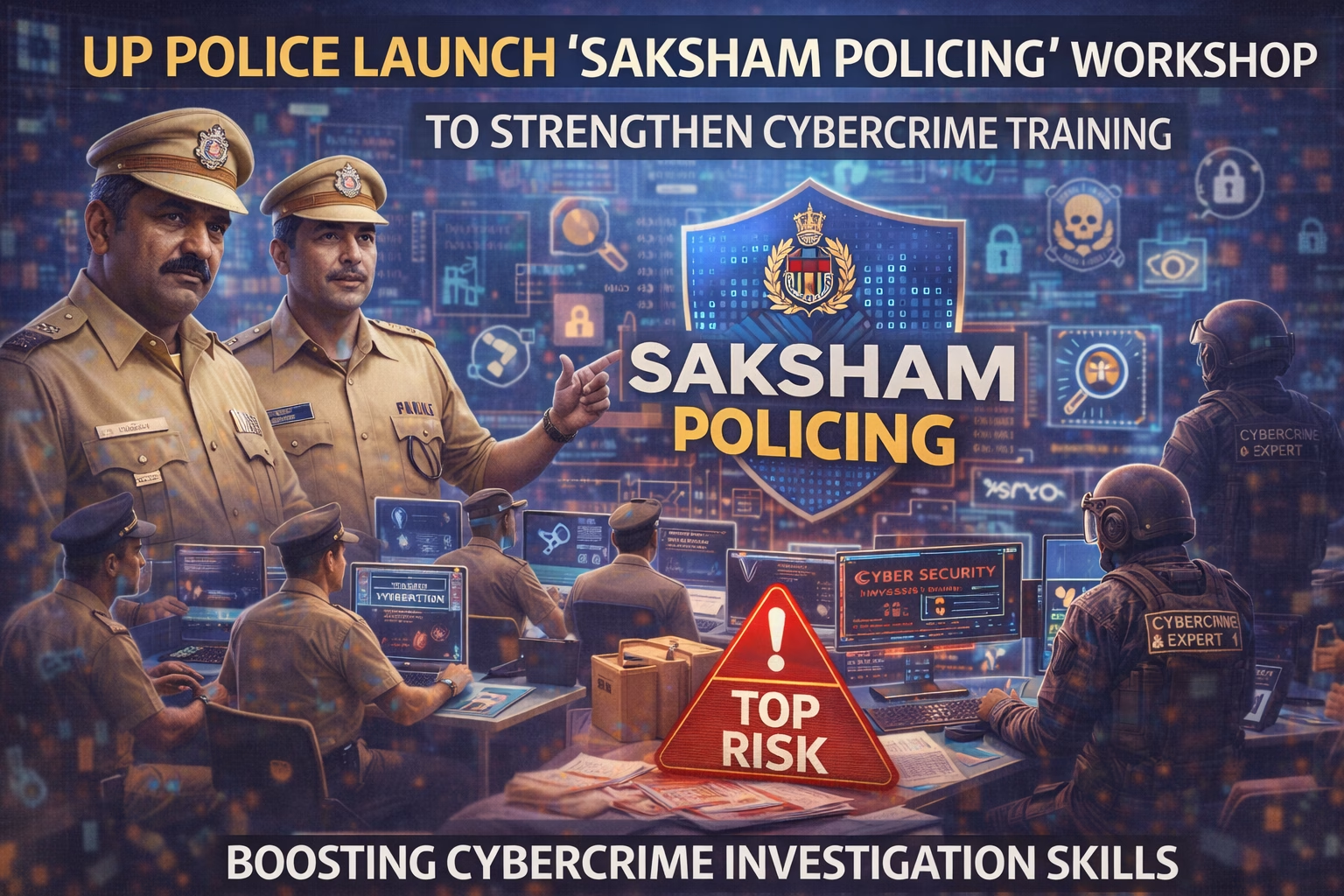
Background and Timeline: Inaugurated on February 8, 2026, by DGP Rajeev Krishna, the “Saksham Policing” workshop is a collaboration between the UP Police and TISS. The program represents a significant step towards strengthening the technical and behavioral competencies of police personnel in the digital age. Only 40 officers were selected for this intensive pilot program from a massive state force.
Modus Operandi: The program focuses on enhancing behavioral competence and modern technical awareness in high-pressure digital environments. Technical sessions are led by experts from the UP ATS Economic Analysis Wing (EAW) using experiential learning and activity-based methods. Participants receive hands-on training in advanced banking data analysis using Excel pivot tables and Power BI data visualization.
Victims and Financial Impact: Not applicable (Training initiative). However, the program aims to improve the resolution rate of financial crime cases, thereby increasing recovery probability for millions. The DGP noted that effective verbal and non-verbal communication is critical in public-facing cyber stations to improve the police force’s public image and effectiveness.
Investigation and Agencies Involved: The Uttar Pradesh Police Training Directorate and the specialized training branch of the Lucknow Commissionerate organized the session. Expert teams from the UP ATS EAW provided practical insights based on their operational experience in unravelling complex economic networks. The workshop prepares officers to respond professionally and lawfully in digital environments.
Arrests and Suspects: A total of 130 police officers, including Crime Inspectors and Cyber Cell personnel, participated in the broader training sessions across zones. The training aims to ensure that these officers can scientifically gather digital evidence that is admissible in court. This upskilling is designed to lead to more timely arrests and stronger evidence-based prosecutions.
Broader Implications and Trends: Success in tackling cybercrime is now viewed as a function of “continuous, high-quality training” rather than just technical tools. The program prepares officers to respond professionally and sensitively in high-pressure digital environments, nurturing a more responsive system. This initiative reflects a trend where human-centric training is linked with technical skills.