
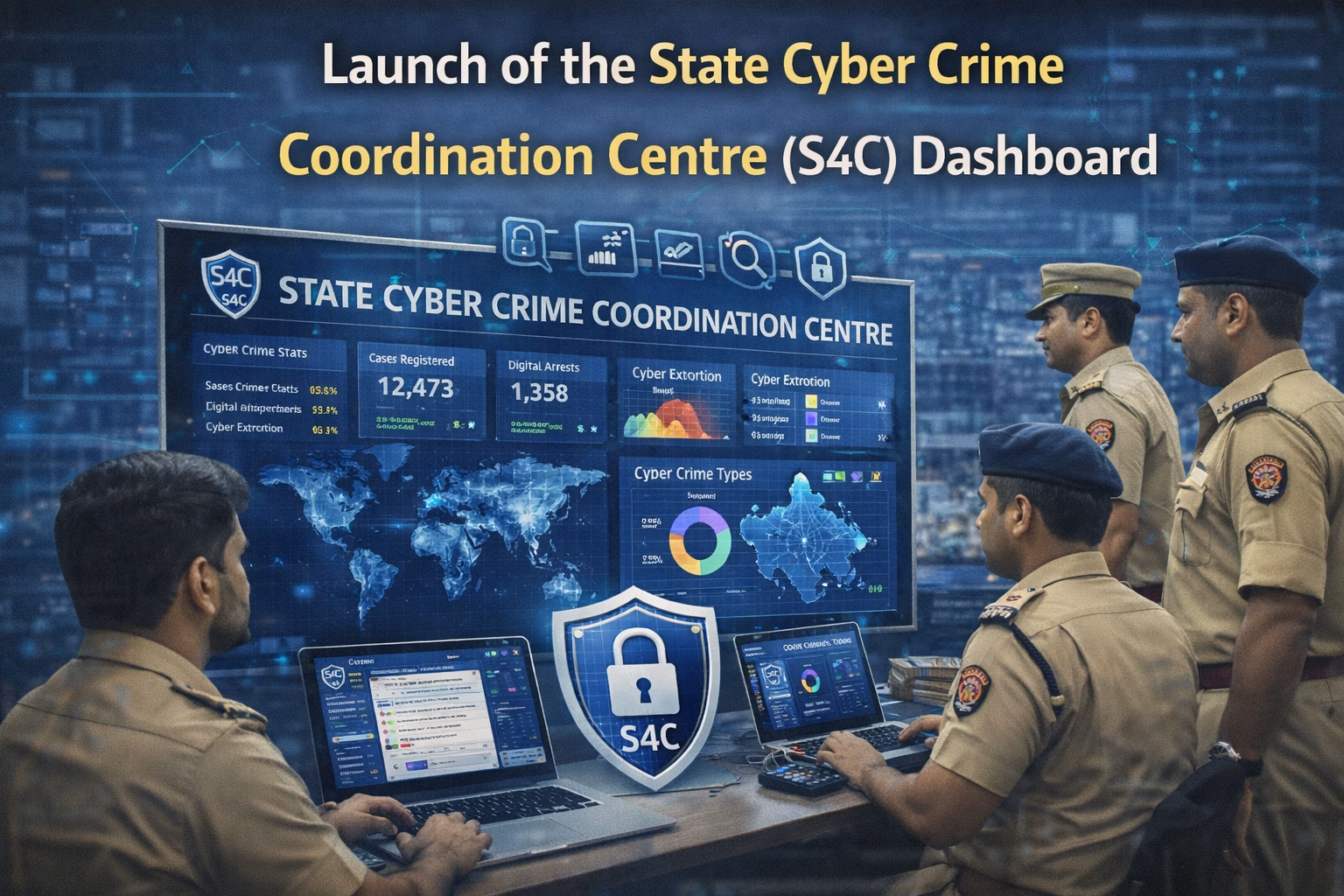
Background and Timeline: Simultaneously with the CBI branch launch on February 10, 2026, the Home Ministry unveiled the State Cyber Crime Coordination Centre (S4C) Dashboard in New Delhi. Developed by the I4C, this tool is part of a multi-year effort to modernize the reporting and tracking of cyber-enabled financial crimes. The dashboard serves as the primary interface for 795 currently established and associated institutions, including banks, fintechs, and NBFCs.
Modus Operandi: The S4C Dashboard is a real-time monitoring and analysis platform that allows for the immediate visualization of fraud patterns across the country. It integrates data from the 1930 national helpline and the NCRP portal, providing state-level agencies with actionable intelligence on recurring mule account networks and suspect IMEIs. The dashboard leverages data analytics to identify fraud clusters before they can scale into nationwide campaigns.
Victims and Financial Impact: The platform is designed to protect the millions of Indian households now connected to the internet, of which 86% currently have active access. By streamlining the “golden hour” response, the dashboard aims to increase the recovery rate of stolen funds, which currently stands at roughly 40% of the total ₹20,000 crore in reported losses. It specifically targets the dismantling of ecosystems that allow criminals to siphon massive proceeds from retail users.
Investigation and Agencies Involved: The I4C is the lead developer, acting as the nodal agency to connect the Ministry of Law & Justice, MeitY, DoT, and state police forces. The dashboard provides a unified view for state law enforcement to track interstate financial movements and coordinate joint raids. It also serves as a communication bridge for 795 registered financial institutions to share threat indicators in real-time. Arrests and Suspects: While not a direct arrest tool, the dashboard’s analytics have already facilitated the linkage of thousands of FIRs to specific high-value syndicates. Amit Shah noted that of the 82 lakh complaints filed, 1.84 lakh have been converted into formal FIRs, a conversion rate the dashboard is intended to improve. It allows investigators to identify the “institutionalized” nature of cybercrime suspects who move across multiple jurisdictions.
Broader Implications and Trends: The S4C dashboard represents the shift toward a “victim-centric framework” in Indian cybersecurity policy. It reflects the government’s recognition that the rapid adoption of UPI and mobile banking has created a new landscape of vulnerability that requires automated, tech-driven oversight. This trend emphasizes that real-time reporting and coordinated forensics are the only ways to stay ahead of sophisticated, technologically advanced criminals.