
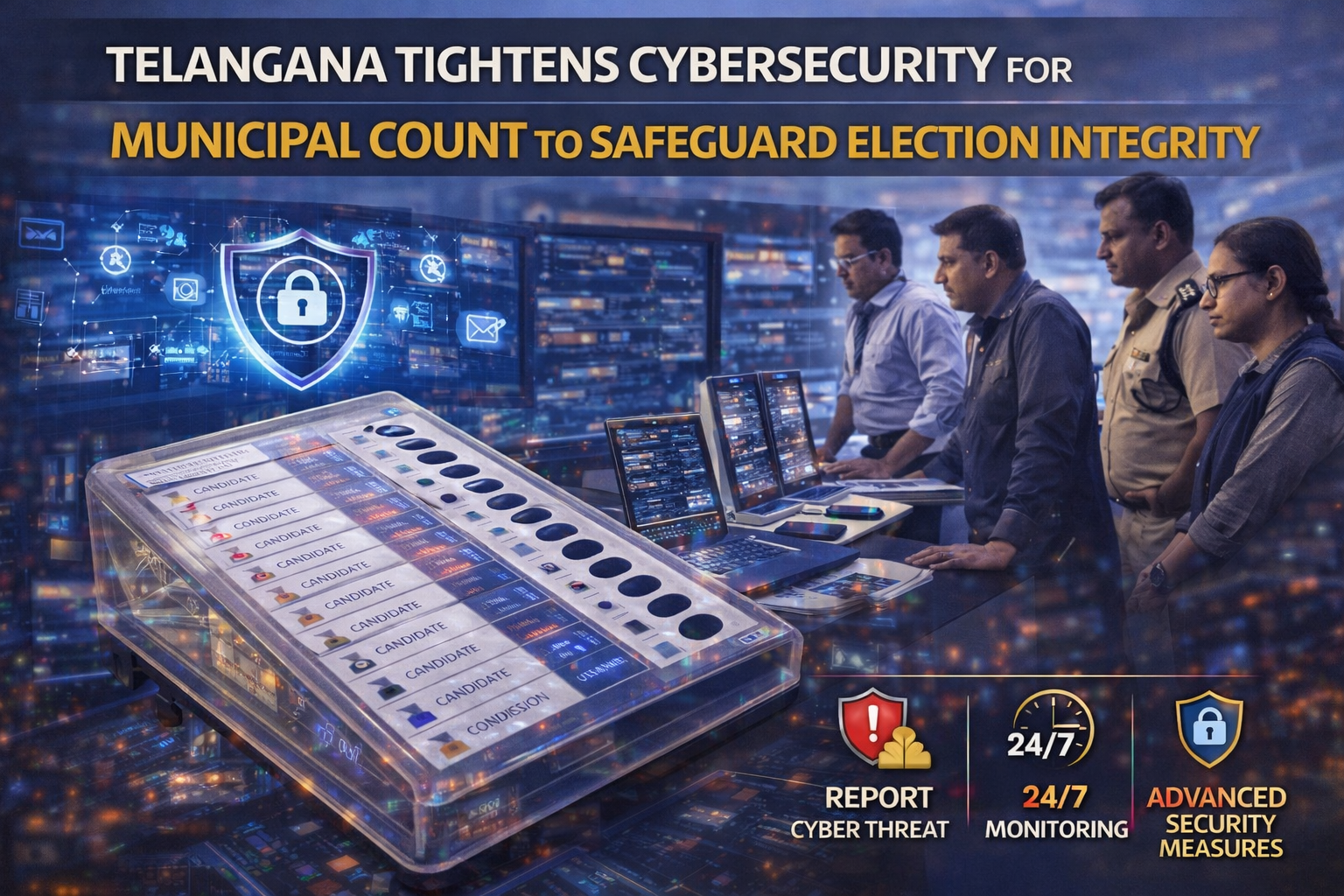
Background and Timeline: On February 11, 2026, Telangana recorded a 73% voter turnout for municipal elections across 116 municipalities and seven corporations. The state election commission enforced strict security measures for the counting process, which began on February 13. These measures were implemented to ensure the transparency and integrity of the results in a high-stakes political environment.
Modus Operandi: The counting process involved 123 centers across the state, utilizing webcasting and restricted access to counting halls to prevent external interference. Since ballot papers were used, the commission prioritized the security of postal ballots and the digital transmission of count data. Prohibitory orders were enforced around the premises to ensure a peaceful environment during the tallying phase.
Victims and Financial Impact: The primary “victim” of any security lapse would be the democratic process itself, which the state has invested heavily in securing. While no cyberattack was reported, the stakes were high as political parties shifted candidates to “camps” to prevent poaching or digital manipulation before the election of mayors on February 16. The operational cost of these security measures reflects the perceived risk of electoral interference.
Investigation and Agencies Involved: The State Election Commission worked in conjunction with local police forces to manage the physical and digital security of the counting centers. Teams monitored social media to pre-empt the spread of misinformation regarding “inflated” results or misuse of power. The results are expected to significantly influence the urban political landscape, necessitating a highly secure final audit.
Arrests and Suspects: No specific arrests related to election-day fraud or cyber interference were reported, though the police remained on high alert for poaching activities. Opposition leaders alleged misuse of power, but the commission maintained that the webcasting and counting protocols were followed strictly. The focus remains on the peaceful transition of power in the urban local bodies.
Broader Implications and Trends: This case demonstrates the growing trend of utilizing “digital transparency” (webcasting/live monitoring) to protect traditional physical electoral processes. It highlights the concern that digital communication can be used to coordinate “poaching” of candidates in the post-poll phase. The integration of strict security protocols is now a standard requirement for maintaining trust in large-scale democratic exercises.