
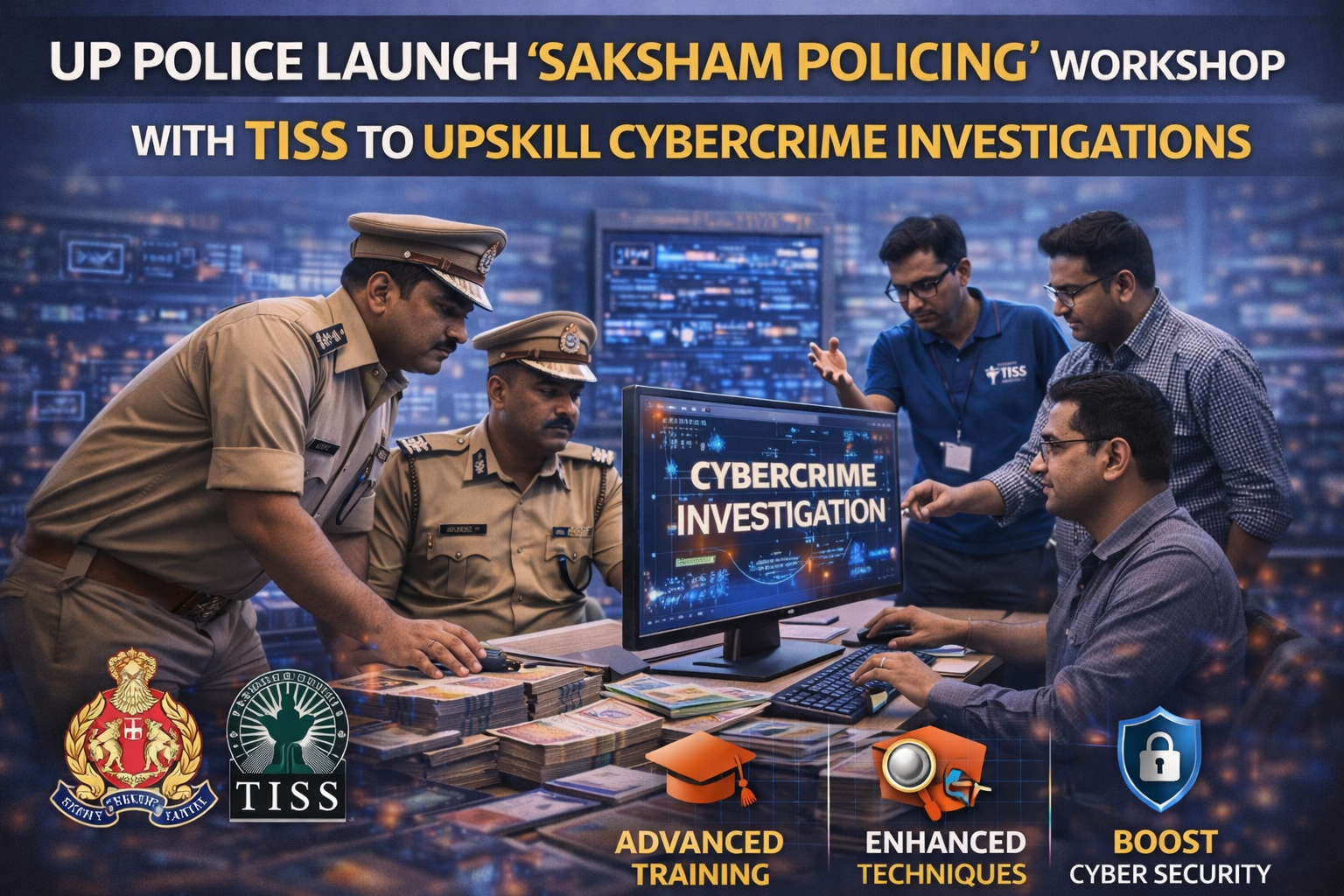
Background and Timeline: Inaugurated on February 8, 2026, the “Saksham Policing” workshop is a joint collaboration between the UP Police and the Tata Institute of Social Sciences (TISS). The program was formally launched by DGP Rajeev Krishna to address the “digital investigation gap” within the state’s force. The intensive training for the selected 40 pilot officers concluded this week in Lucknow.
Modus Operandi: The workshop utilized activity-based learning to train officers in advanced banking data analysis and digital footprint scrutiny. Participants were instructed in the use of Excel pivot tables and Power BI to visualize money laundering networks and track fraudulent proceeds across multiple layers. The training also focused on behavioral competence and professional communication styles required in high-pressure digital environments.
Victims and Financial Impact: The upskilling initiative is a direct response to the massive financial losses reported in the state, which saw complaints involving losses of ₹138 crore in January alone. By training 130 officers in the first phase, the department aims to significantly improve the restitution rate for millions of citizens. Improved digital forensic capabilities will ensure that evidence gathered is scientifically sound and admissible in court.
Investigation and Agencies Involved: The UP Police Training Directorate and experts from the UP ATS Economic Analysis Wing (EAW) led the technical sessions. The Lucknow Police Commissionerate organized the venue and provided logistical support for the interstate coordination modules. The program aims to nurture a more responsive and humane policing system by linking digital skills with social sensitivity.
Arrests and Suspects: While the workshop is for capacity building, its immediate goal is to empower Crime Inspectors and Cyber Cell personnel to execute more timely and effective arrests. The DGP noted that the success of security forces depends on “continuous, high-quality training” rather than just static technical tools. The training includes specific protocols for handling cryptocurrency-based frauds and syndicate-run extortion.
Broader Implications and Trends: This case highlights a trend toward “professionalizing” cyber investigations through academic partnerships like TISS. It demonstrates that behavioral and technical competencies are now equally vital for modern law enforcement. This initiative is expected to set a national precedent for human-centric cyber-policing training in India.