
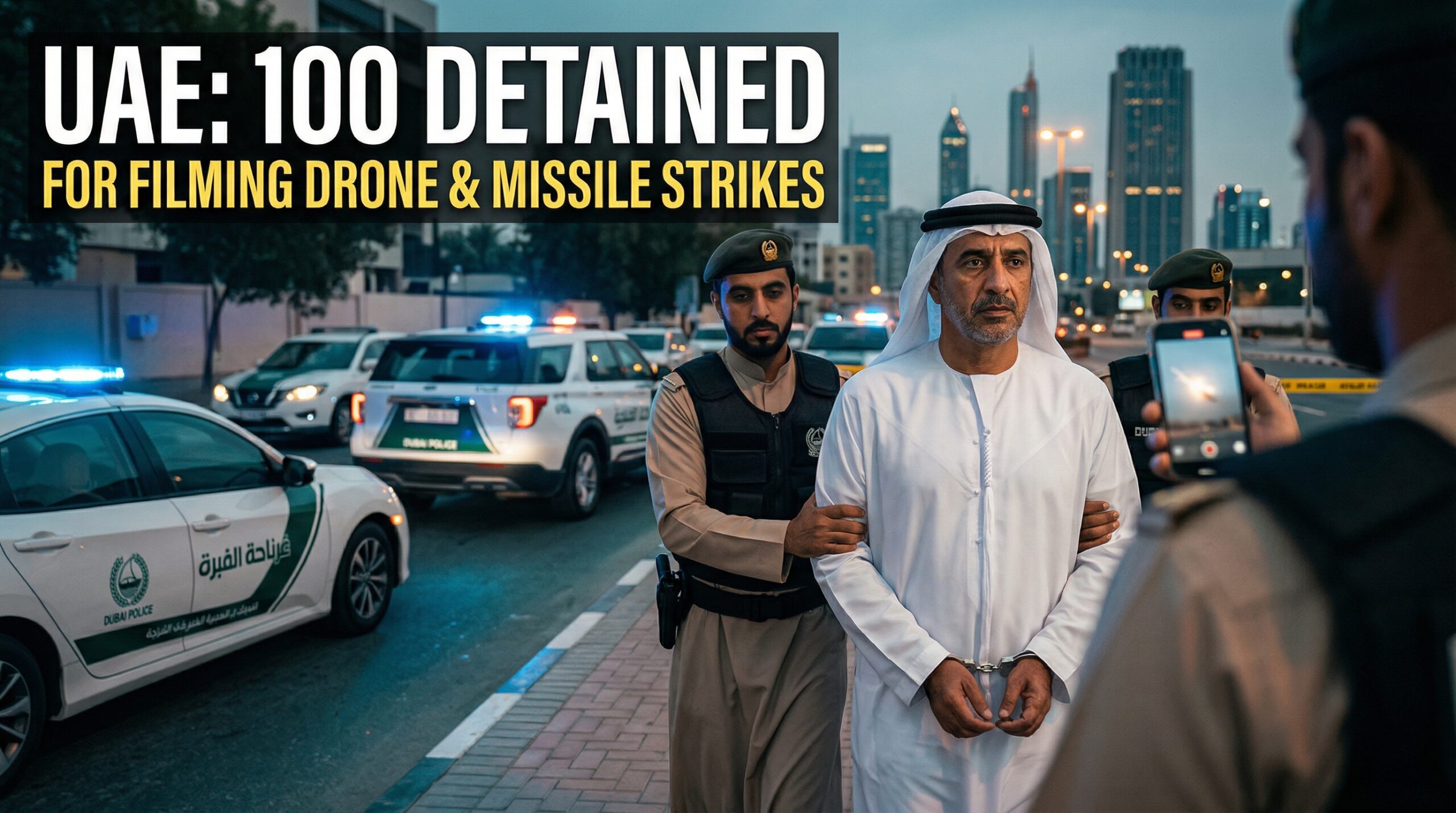
Background and Timeline: Reported on March 14 and updated on March 16, 2026, police in the United Arab Emirates carried out a series of large-scale detentions. The crackdown followed a wave of regional conflict involving drone and missile attacks targeting sensitive areas. The operation was initiated to prevent the dissemination of “harmful digital content” that could be used for kinetic or cyber intelligence by adversaries.
Modus Operandi: Suspects were identified through real-time social media monitoring and physical surveillance near strike zones. They were caught filming or sharing footage of strikes and resulting damage on platforms like TikTok and X. Authorities classified this as a threat to national security, as the footage can be used by attackers to “correct their aim” and perform damage assessment for future strikes.
Victims and Financial Impact: The primary “victim” in the government’s view is the national security posture and the secrecy of defense deployments. While no direct financial theft was involved, the sharing of such footage is viewed as providing “unintentional intelligence” to enemy states. The arrested individuals face severe legal consequences under the UAE’s strict digital content moderation and national security laws.
Investigation and Agencies Involved: UAE national police and specialized cyber-intelligence units led the operation. Investigators mapped the “social spread” of the videos to identify the primary uploaders and influencers. The operation reflects a trend of “digital censorship” in conflict zones, where public safety is prioritized over the freedom of individual information sharing on social media.
Arrests and Suspects: Approximately 100 individuals have been detained across several Emirates since the strikes began. The suspects include both UAE nationals and expatriates who were active on digital platforms during the incidents. Authorities have warned that “content moderation” is now a component of kinetic warfare and that further arrests will be made for any unauthorized filming or dissemination.
Broader Implications and Trends: This case highlights the “blurring of kinetic and digital warfare” where smartphones have become intelligence-gathering tools for both sides in a conflict. It demonstrates that internet shutdowns and content blocks are now standard state strategy in emergency zones. The move reflects a global trend toward strict “information lockdowns” to protect critical physical infrastructure.