
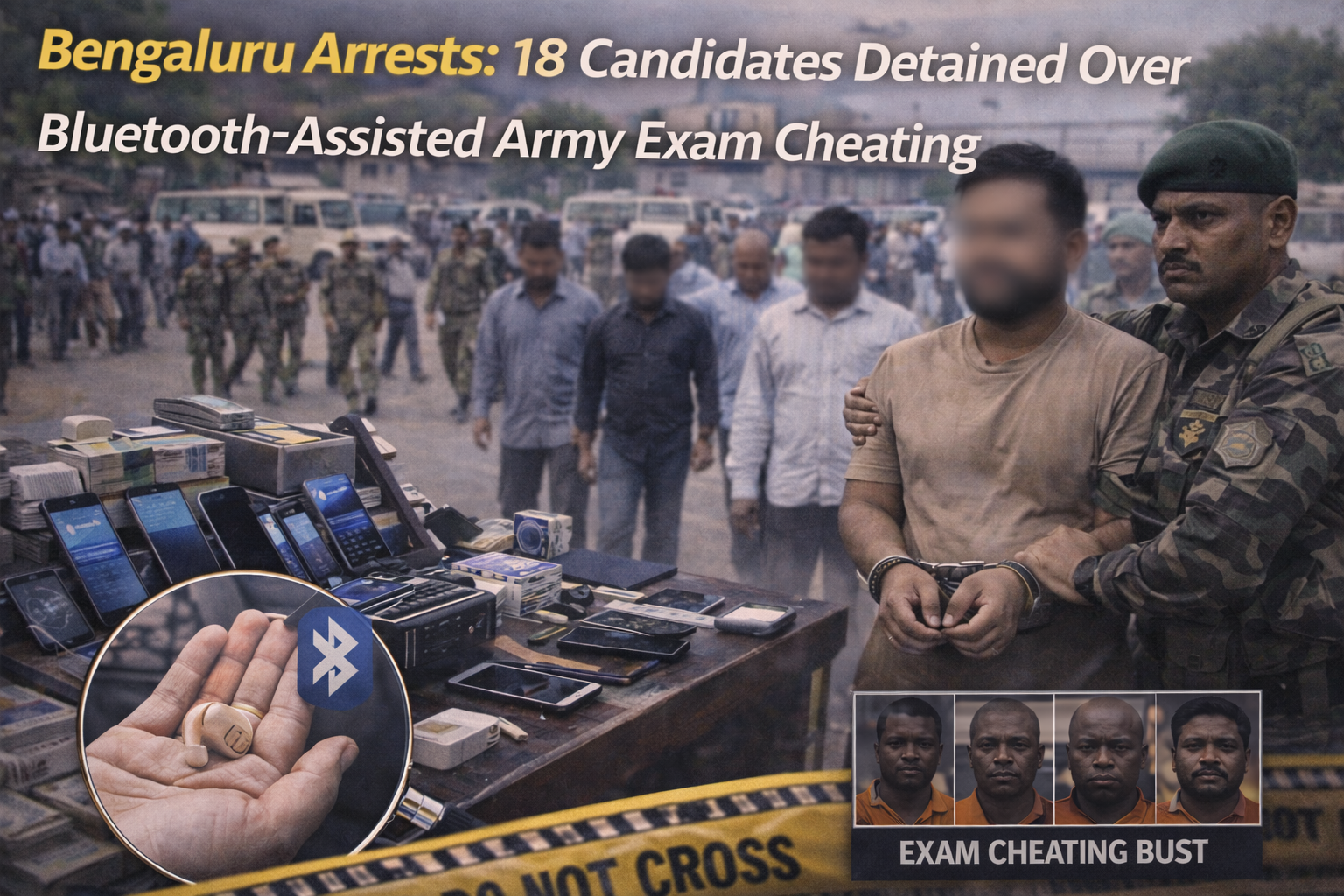
Background and Timeline: On February 10, 2026, the Bengaluru police announced the arrest of 18 candidates involved in a sophisticated cheating ring at the 515 Army Base Workshop. The candidates, all from Haryana, were apprehended during a recruitment examination held on February 8. The arrests were made following a thorough frisking that uncovered concealed electronic devices.
Modus Operandi: Candidates used high-tech gadgets and miniaturized Bluetooth-linked devices to communicate with accomplices outside the exam hall. Preliminary findings indicate that the suspects allegedly photographed the question papers using hidden cameras and relayed the images to handlers. The accomplices would then dictate the correct answers through the Bluetooth devices in real-time as the test proceeded.
Victims and Financial Impact: The integrity of the recruitment for the post of Fireman was directly threatened, potentially impacting thousands of legitimate aspirants. While no money was stolen from the Army, the candidates likely paid substantial sums to the cheating syndicate to secure the answers. The cost of re-examining the candidates and strengthening future security protocols represents a significant administrative burden.
Investigation and Agencies Involved: Bengaluru city police and military security personnel coordinated the raid and the subsequent interrogation. Forensic teams are analyzing the specialized electronic devices to trace the frequency and the destination of the relayed images. The investigation is currently looking for the masterminds who organized the transportation and housing for the candidates from Haryana.
Arrests and Suspects: Eighteen candidates, primarily residents of Haryana, have been remanded to judicial custody following their arrest on the spot. The police are investigating whether these individuals are part of a larger pan-India paper leak syndicate that has targeted multiple defense exams. The suspects are being questioned to identify the location of the calling centers from where the answers were dictated.
Broader Implications and Trends: The use of “sophisticated electronic devices” for exam cheating reflects the industrialization of recruitment fraud in India. It demonstrates that perimeter security must now include signal jamming and advanced technical frisking to protect the sanctity of competitive exams. This incident has led to calls for stricter background checks for candidates arriving from regions with a history of organized cheating modules.