
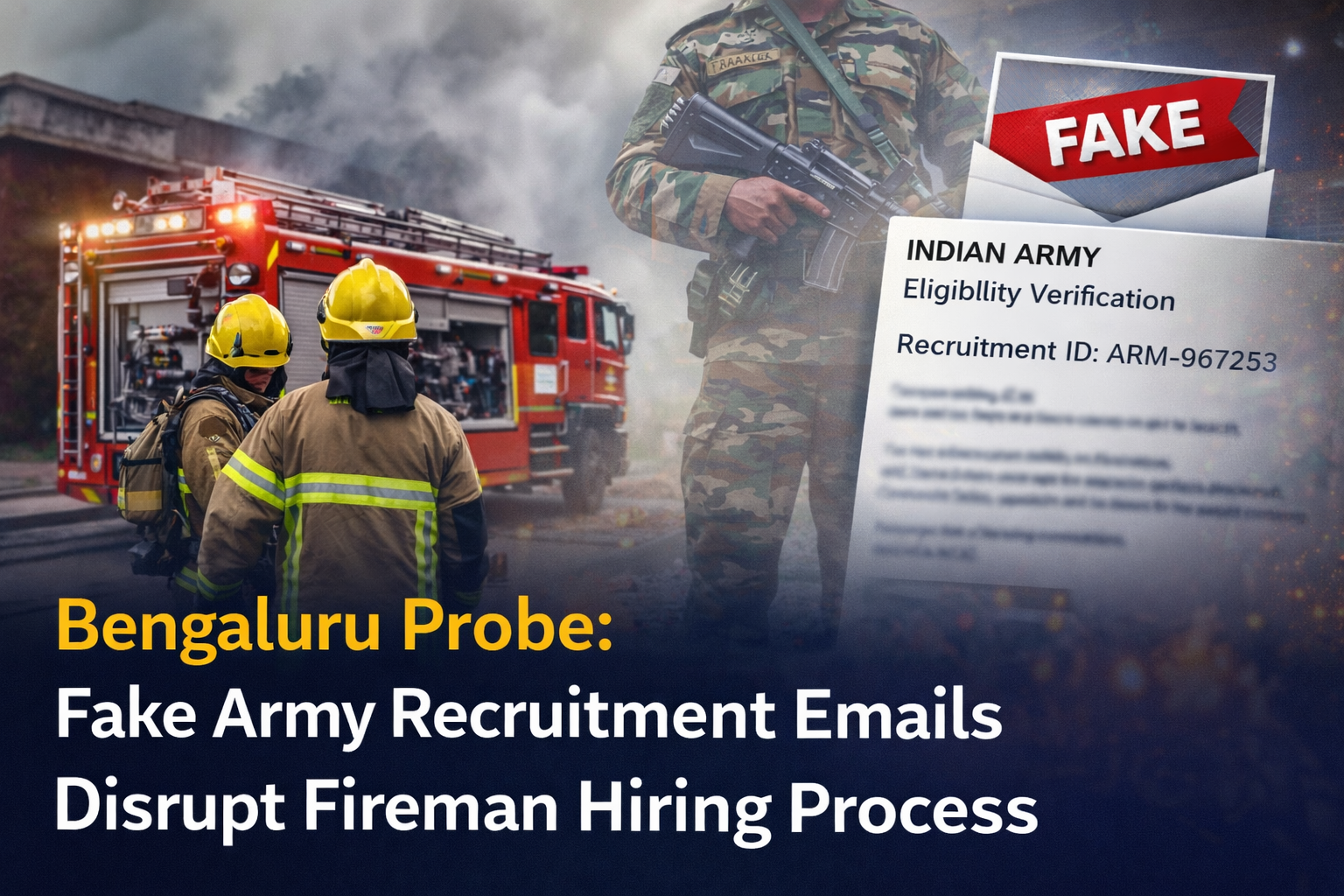
Background and Timeline: Reported on February 13, 2026, the East Division Cyber Crime police in Bengaluru registered a new case regarding the disruption of the Army’s fireman recruitment process. The investigation was triggered by a complaint from Col Jyothirlingam S S, the security officer at the 515 Army Base Workshop (ABW) in Ulsoor. The incident occurred just as the recruitment was scheduled to begin on Friday.
Modus Operandi: Unknown individuals circulated fake emails to eligible candidates, claiming the recruitment had been postponed from February 15 to February 22 due to “technical reasons”. The emails originated from a fraudulent ID that closely resembled the official authorized address used by the Army Base Workshop. The goal was reportedly to mislead aspirants and prevent them from attending the recruitment process on the correct dates.
Victims and Financial Impact: Dozens of candidates received the misleading emails, potentially causing significant confusion and missed career opportunities for those who did not verify the schedule. One candidate, Dilip Kumar Meena, flagged the email to civil defense employees, leading to an immediate clarification from the unit. While no direct financial theft was reported, the potential for career-damaging misinformation is high.
Investigation and Agencies Involved: The East Division Cyber Crime police are investigating the origins of the fake email ID and the servers used to dispatch the messages. A First Information Report (FIR) has been registered under provisions of the IT Act and the Bharatiya Nyaya Sanhita (BNS). The Army Base Workshop immediately issued warnings to all candidates to proceed as per the original January 12 schedule.
Arrests and Suspects: No arrests have been made yet in connection with the fake emails. However, the police are exploring links to a separate group of 18 candidates from Haryana who were arrested on February 10 for using Bluetooth gadgets to cheat during the same recruitment exam. Investigators suspect that the emails and the cheating ring might be part of a coordinated effort to undermine the recruitment integrity.
Broader Implications and Trends: This case highlights the trend of “disruption-as-a-service” where scammers or rival interest groups use digital misinformation to interfere with critical government processes. It underscores the vulnerability of recruitment exams to both high-tech cheating and sophisticated phishing campaigns. Authorities emphasize that official military communications will never originate from unverified or unofficial email domains.