
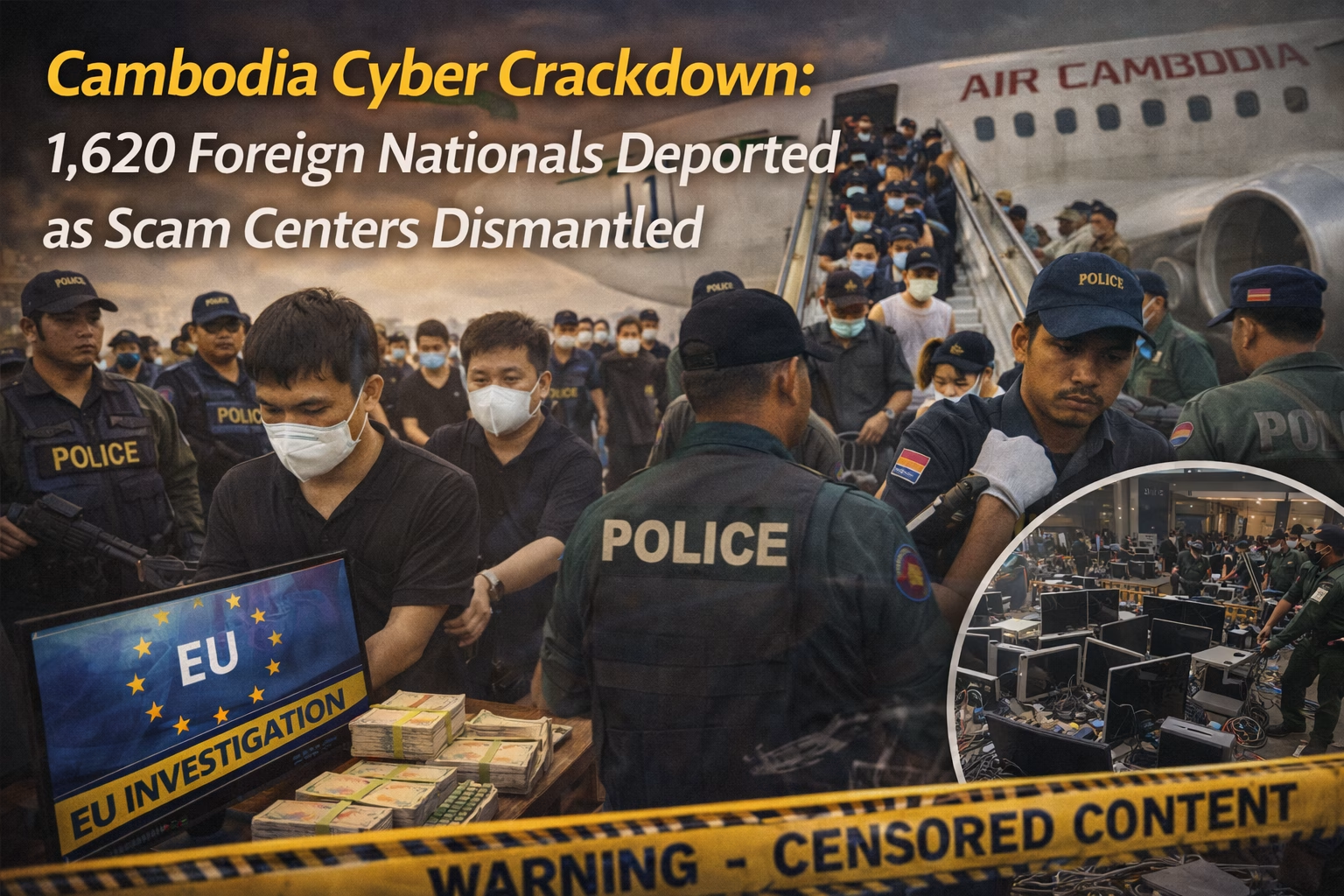
Background and Timeline: Cambodian authorities reported a massive escalation in their fight against cross-border cybercrime throughout late January 2026 . On January 23 alone, 209 foreign nationals were deported from Phnom Penh back to their home countries . The scale of the crackdown has expanded significantly in recent weeks, as the government attempts to restore its international reputation after being labeled a hub for “cyber slavery” .
Modus Operandi: The deportees were linked to organized technology-based fraud syndicates and illicit online scam centers that target victims globally through high-pressure investment and dating schemes . These centers often rely on “cyber slavery,” where individuals are lured by fake job offers, held in gated compounds, and coerced into carrying out digital frauds . Recent raids uncovered weapons, fake uniforms, and advanced hardware used to simulate professional call center environments .
Victims and Financial Impact: Between January 1 and January 22, 2026, Cambodia deported a total of 1,620 foreigners representing 21 different nationalities . Over the past seven months, these operations have resulted in the arrest of 5,106 suspects from 23 nationalities, with 4,534 already deported . The operation has also led to the rescue of hundreds of victims who were trafficked or deceived into working in these compounds against their will .
Investigation and Agencies Involved: The Cambodian General Department of Immigration and the specialized Anti-Cyber Crime Department under the Ministry of Interior are leading the nationwide drive . The operation is being conducted in coordination with foreign embassies and international partners like Interpol and the Indian I4C to facilitate safe repatriation . Prime Minister Hun Manet has identified public security and the fight against cybercrime as top priorities for his government’s mandate .
Arrests and Suspects: Recent deportees include 73 nationals from South Korea and 136 from Myanmar who were involved in cross-border scam operations . Cambodian courts have already processed 37 major cases related to cyber fraud, resulting in the sentencing of 172 high-level ringleaders and accomplices . Authorities have emphasized that strict legal measures will continue to be applied to holding ringleaders accountable “without exception” .
Broader Implications and Trends: This intensified crackdown marks a turning point in Southeast Asia’s response to transnational digital mafias, moving toward aggressive regional enforcement and mass removal of criminal infrastructure . It underscores the success of diplomatic pressure from India and other nations in forcing Cambodian authorities to dismantle established scam hubs . Experts suggest that the mass deportation model may serve as a template for other nations in the region to curb the “cyber slavery” crisis .