
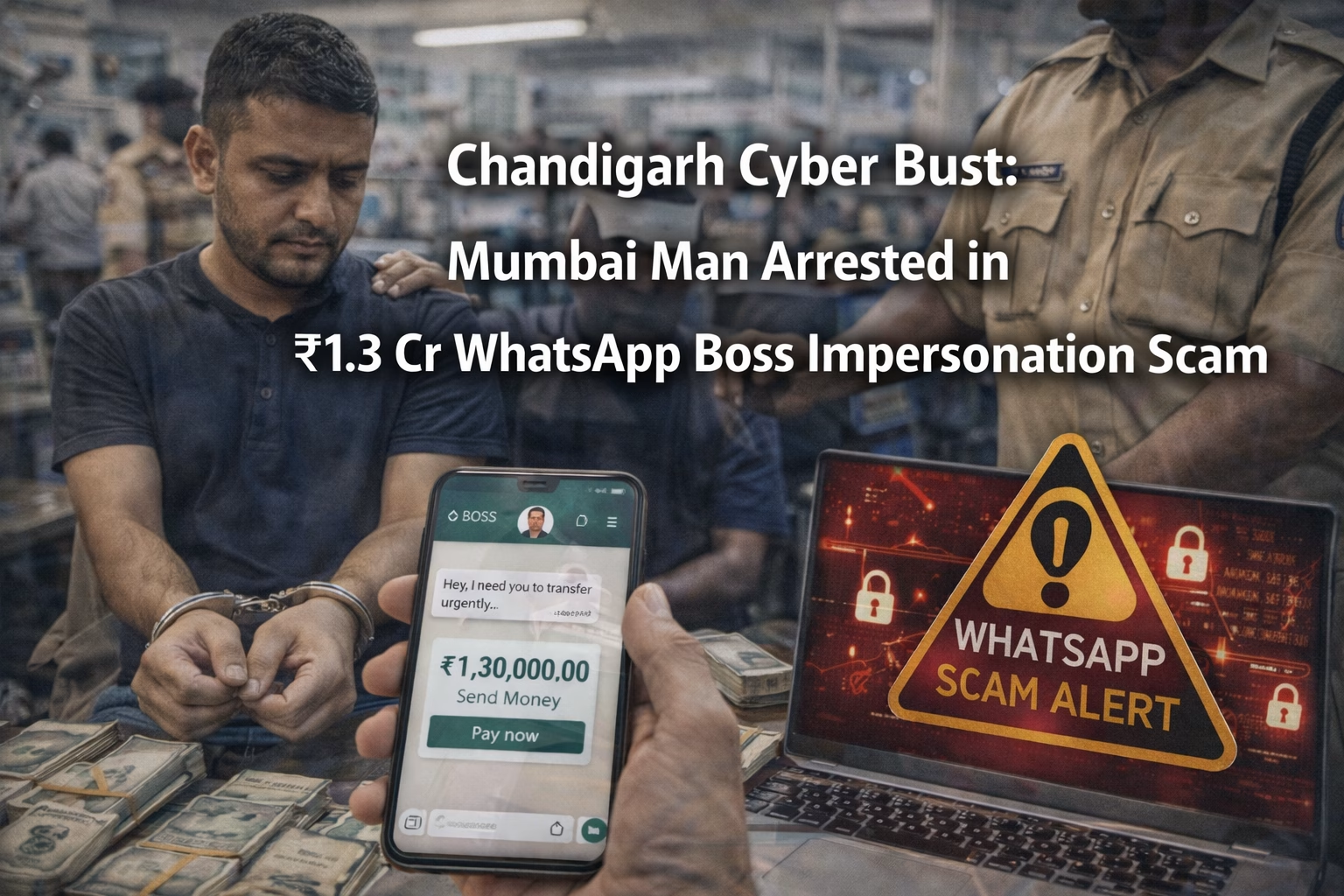
Background and Timeline: On February 6, 2026, the Chandigarh Cyber Cell tracked a major fraudulent transaction involving a city resident. The case was registered after the victim realized that his employer had not sent the requests for money received via WhatsApp. This arrest follows a broader drive by the UT cyber wing which nabbed 33 frauds and froze ₹1 crore in the first month of 2026.Modus Operandi: The attacker used a WhatsApp account with the victim’s boss’s name and profile picture to request an urgent financial transfer for a supposed project emergency. Feeling pressured by the perceived authority of his employer, the victim transferred ₹1.3 crore in multiple transactions. The funds were moved into an ICICI bank account that was specifically prepared to receive the fraudulent proceeds. Victims and Financial Impact: The victim lost a total of ₹1.3 crore, though the swift response of the Chandigarh Police allowed them to freeze part of the amount across layered accounts. Residents of Chandigarh lost a total of ₹44.07 crore to online fraudsters in 2025, emphasizing the scale of the threat in the Union Territory. The police have managed to prevent further losses by freezing ₹1.13 crore across various cases in early 2026.Investigation and Agencies Involved: The Chandigarh Police’s Cyber Crime unit, led by SP Geetanjali Khandelwal, tracked the financial trail to Mumbai. They used the Cyber Investigation Assistance Request (CIAR) mechanism on the I4C Samanvya Portal to coordinate with other state police departments. Technical analysis of the WhatsApp messages and the ICICI bank account linked the fraud to a broader network coordinating via Telegram. Arrests and Suspects: Joshua Oscar Nevis, a 34-year-old resident of Mumbai, was arrested for his role in receiving the cheated funds. During interrogation, he admitted to handing over his banking instruments and SIM cards to contacts on Telegram for a fixed commission. Police are now working to identify the high-level handlers who used Nevis’s credentials to orchestrate the impersonation scam. Broader Implications and Trends: The case highlights the trend of “workplace impersonation” and the critical role of Telegram in recruiting local bank mules for high-value fraud. Authorities warned the public against transferring money for “verification” or to resolve fabricated cases based on unsolicited messages. The success of the CIAR mechanism proves the effectiveness of centralized platforms like I4C in dismantling interstate crime loops.
Our service proudly boasts of 100% satisfaction from over 1 lakh customers.