
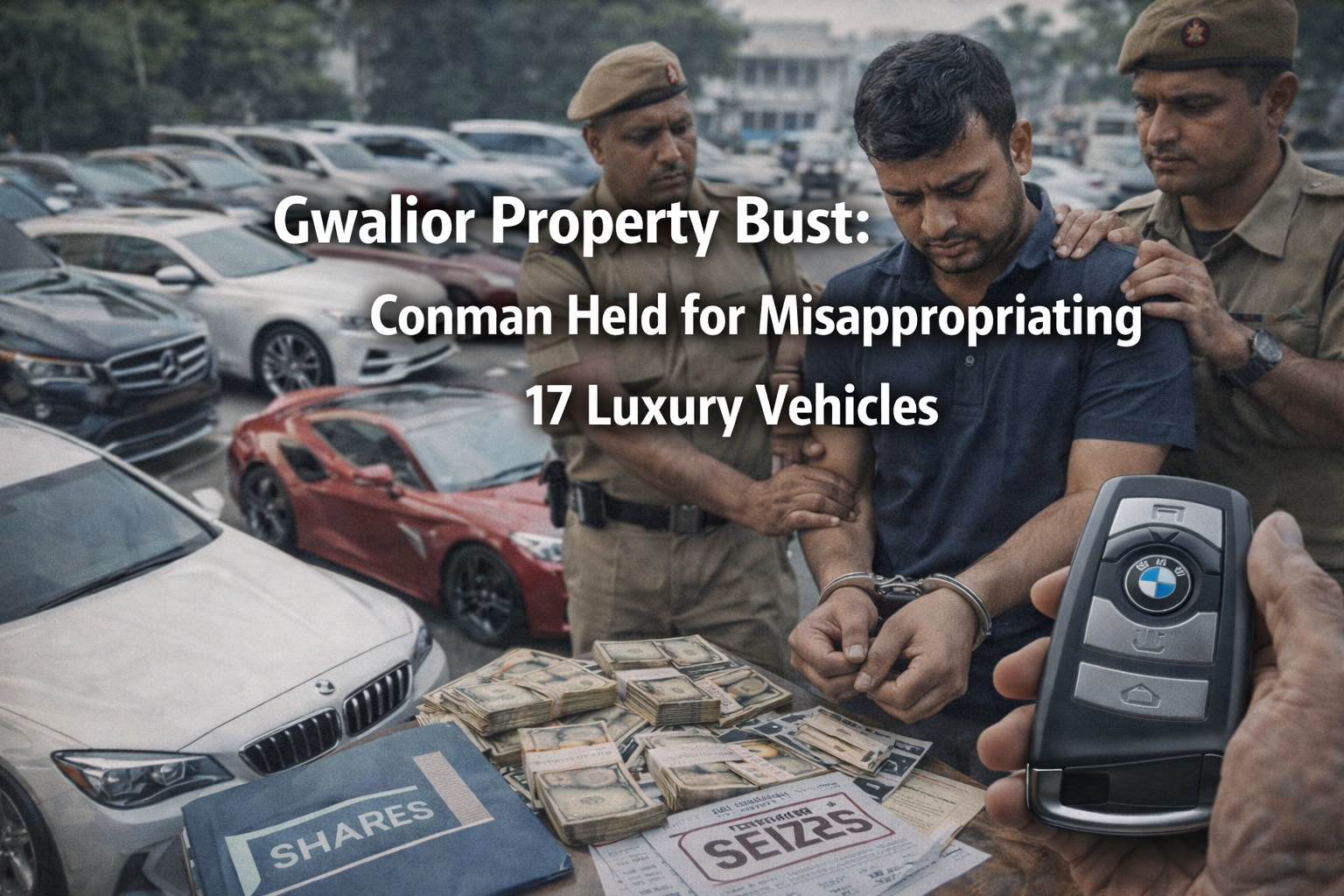
Background and Timeline: The Gwalior Crime Branch in Madhya Pradesh announced a significant success on Friday, February 5, 2026, in a case of organized property misappropriation. The investigation followed a major complaint from the owner of Madhuvanji Travels who reported the sudden disappearance of 19 high-end SUVs. This breakthrough marks a growing trend of “Physical-Cyber Scams” where digital platforms and forged business papers are used to commit high-value theft.
Modus Operandi: The accused utilized “Government Attachment Deception,” posing as a manager of a private firm with high-level state contracts. He persuaded travel operators to hire out their luxury vehicles—promising rentals of up to ₹85,000 per month—under the pretext that they would be deployed for official use by government departments. once he took possession of the cars, he used forged ownership templates to mortgage the vehicles for ₹2–5 lakh each at various pawnshops.
Victims and Financial Impact: Two major travel operators were defrauded of approximately 40 high-end vehicles, including SUVs and premium sedans. The total value of the misappropriated assets is estimated at several crores, with 17 vehicles collectively worth ₹1.5 crore recovered during the initial raids. The financial ruin caused to the victims includes the loss of their primary business assets and the burden of ongoing vehicle EMI payments without any rental income.
Investigation and Agencies Involved: The Gwalior Crime Branch utilized a combination of technical surveillance and “GPS Vehicle Pings” to locate the misappropriated cars. Investigators analyzed suspect profiles and mobile tower data to track the conman to a hideout where the final raid was executed. Interrogations are currently focused on identifying the “Pawn Network” and the legal intermediaries who facilitated the transfer of vehicles based on forged documentation.
Arrests and Suspects: The primary suspect, 23-year-old Abhay Bhadauria, a BA graduate who previously ran a tiffin center, was arrested and produced in court. Bhadauria had allegedly been operating the scheme for months, using a sophisticated “Synthetic Identity” to win the confidence of vehicle owners. Police are currently seeking his associates who managed the logistics of moving the mortgaged cars to different districts to evade detection.
Broader Implications and Trends: This case reflects an escalation in “Institutional Impersonation” where the reputation of state departments is leveraged to bypass a victim’s natural caution. it underscores the importance of “Physical Asset Verification” and the risk of renting vehicles without background checks on the company’s corporate registration. Authorities advised travel operators to insist on a direct agreement with the government department rather than through intermediaries.