
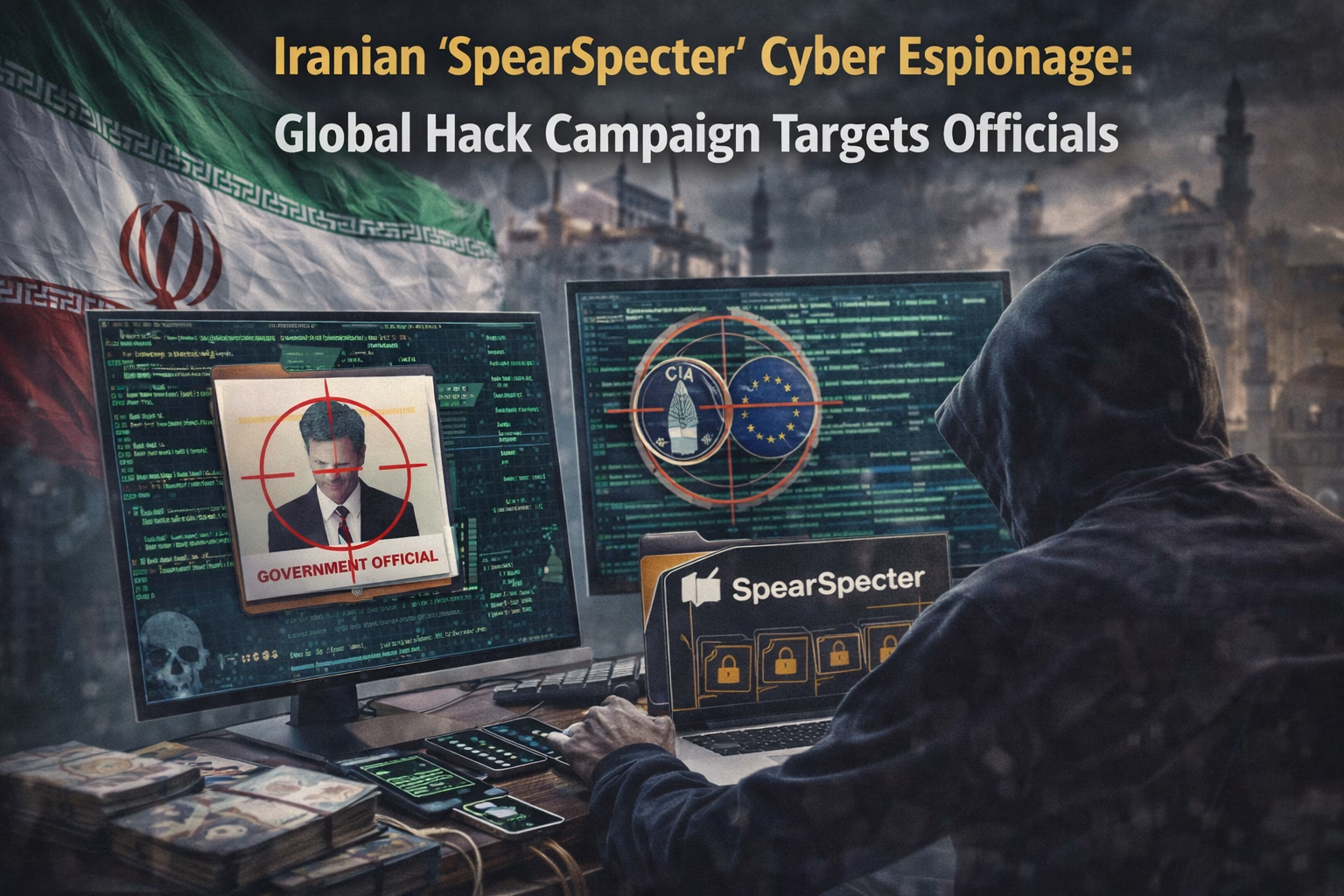
Background and Timeline: Cybersecurity firm Trellix and other researchers reported an intensified cyber-espionage campaign originating from Iran on Thursday, February 5, 2026. The operation, dubbed “SpearSpecter,” has been active throughout late January, specifically targeting high-profile individuals and government agencies. This campaign reflects a significant escalation in Iranian cyber operations despite ongoing internal political instability within the country.
Modus Operandi: The threat actors utilized “Adaptive Spear-Phishing,” creating highly personalized lures tailored to the interests and professional activities of their targets. They delivered a newly discovered Rust-based malware designed to provide comprehensive remote control and data exfiltration capabilities. The campaign also leveraged “AI-Enhanced Surveillance” to automate the reconnaissance phase, making the phishing attempts indistinguishable from legitimate diplomatic or corporate communications.
Victims and Financial Impact: The primary targets include expats, Syrians, and Israeli officials located across the Middle East, Europe, and the United States. While the immediate financial theft is not the primary objective, the stolen credentials and proprietary intelligence pose a severe national security risk to the affected nations. The breach of personal and non-clinical IT environments in healthcare systems has also been reported, leading to “cascading” disruptions in patient care.
Investigation and Agencies Involved: International intelligence agencies and private security firms like Orange Cyberdefense and Silent Push are tracking the “IP Concentration” of the campaign. The investigation has linked the “SpearSpecter” signatures to a state-backed Iranian outfit that has previously targeted Western political interests. Technical analysts are currently mapping the “Vendor-Controlled C2” samples to identify the geographical hubs used for data staging.
Arrests and Suspects: No arrests have been made due to the nation-state nature of the threat actors, who operate from secure facilities within Iran. however, several international “Wanted Notices” have been issued for regional facilitators suspected of assisting in the technical setup of the Rust-based malware servers. Investigators are working to identify the specific “Initial Access Brokers” who may have sold corporate network entry points to the Iranian syndicate.
Broader Implications and Trends: This operation signals the “Geo-Politicization of Cyberspace” where state craft is increasingly conducted through digital intrusion and sabotage. it marks a trend where threat actors align with state narratives to conduct “Escalatory Hacktivism” designed to cause real-world disruption. Experts suggest that this necessitates a global move toward “Cryptographically Verifiable Identities” for all government and defense-related digital interactions.