
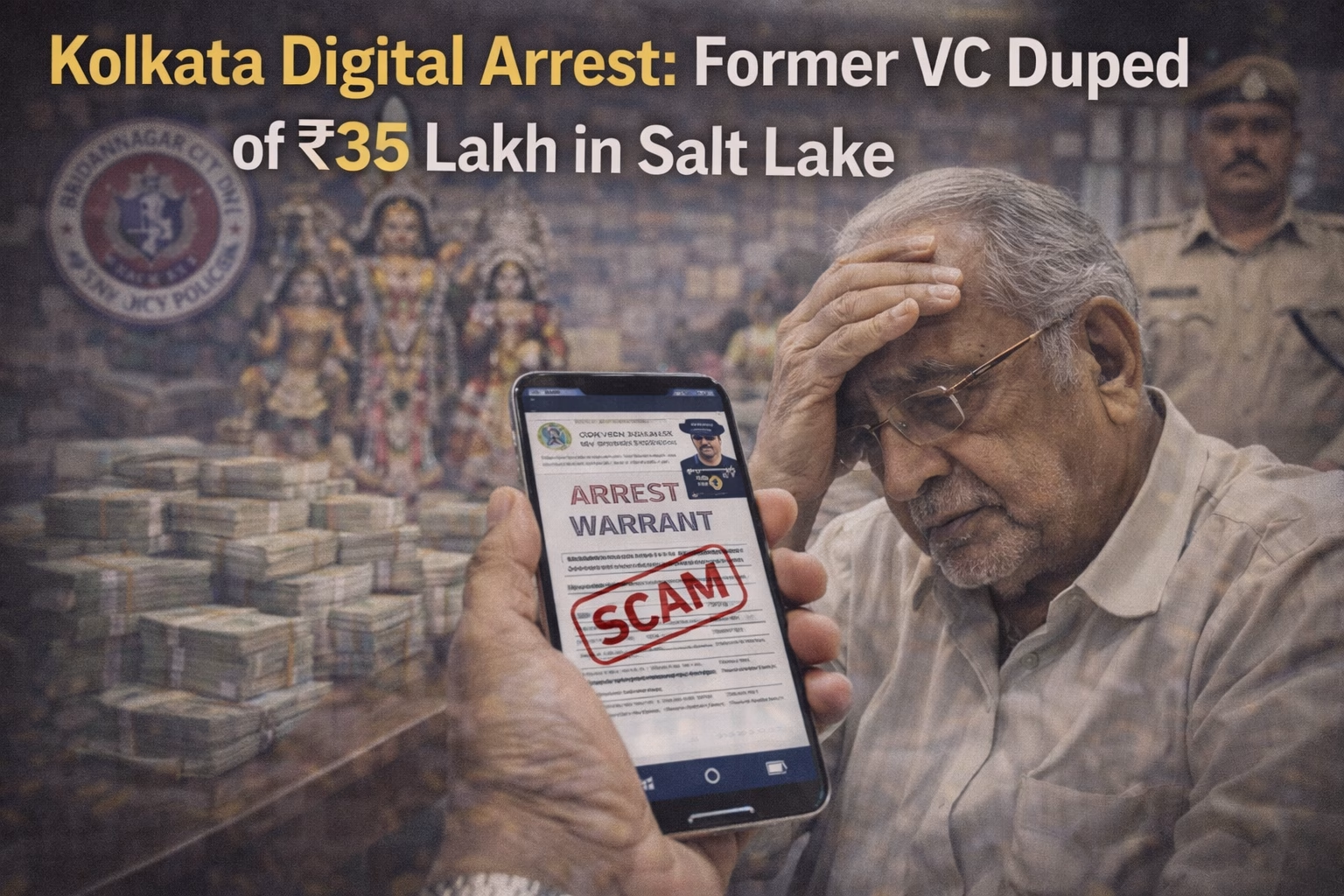
Background and Timeline: A 77-year-old former Vice Chancellor of a state university and two private institutions was targeted in a harrowing “digital arrest” ordeal in early January 2026. Ashoke Ranjan Thakur, a resident of Salt Lake, was kept under virtual house arrest for almost two weeks by fraudsters. The investigation was formally initiated on Tuesday, January 27, after the victim finally approached the Kolkata Police once the scammers ceased their 2-hour reporting requirement.
Modus Operandi: Fraudsters impersonating officials of the Indian Cyber Crime Coordination Centre (I4C) and law enforcement agencies accused the victim of having links with a human trafficker. They utilized a fabricated Supreme Court notice bearing his Aadhaar number to claim that all his assets would be frozen and he would face 1.5 years of remand. To maintain total control, the scammers forced him to share his screen and report his whereabouts every two hours via video call.
Victims and Financial Impact: The elderly academician and his wife suffered a total financial loss of ₹35 lakh, which they were coerced into liquidating from their fixed deposits for “legal verification”. On January 3, ₹20 lakh was transferred to an account in the name of “Shree Ganesh Telecom,” followed by another ₹15 lakh to an agri-chemical firm account on January 7. The loss represents a significant portion of the couple’s retirement savings and has caused immense psychological distress.
Investigation and Agencies Involved: The Kolkata Police and the specialized Cyber Cell are tracing the bank accounts in the names of the beneficiary entities mentioned in the FIR. Technical teams are analyzing the call logs to determine if the syndicate utilized a “SIM box” or VOIP to spoof the identity of official investigative agencies. The investigation is also exploring if this cell is linked to the broader Cambodia-based human trafficking and scam network mentioned in the fraudsters’ script.
Arrests and Suspects: No arrests have been reported as of Tuesday, but the police have registered a case against the unidentified persons who impersonated the I4C and court officials. Investigators are working with the respective banks to identify the individuals who opened the corporate accounts used to receive the victim’s money. Authorities suspect that the callers utilized deepfake technology or highly trained actors to maintain the illusion of professional government officials.
Broader Implications and Trends: This case demonstrates that even highly educated administrators and academic leaders are being targeted and overwhelmed by the sophisticated psychological narratives used in digital arrests. The use of National Security Act (NSA) threats and 2-hour reporting requirements highlights a level of dehumanization and control that mirrors physical kidnapping. Police have reiterated that legitimate agencies do not conduct asset verification or arrests through screen-sharing apps or WhatsApp video calls.