
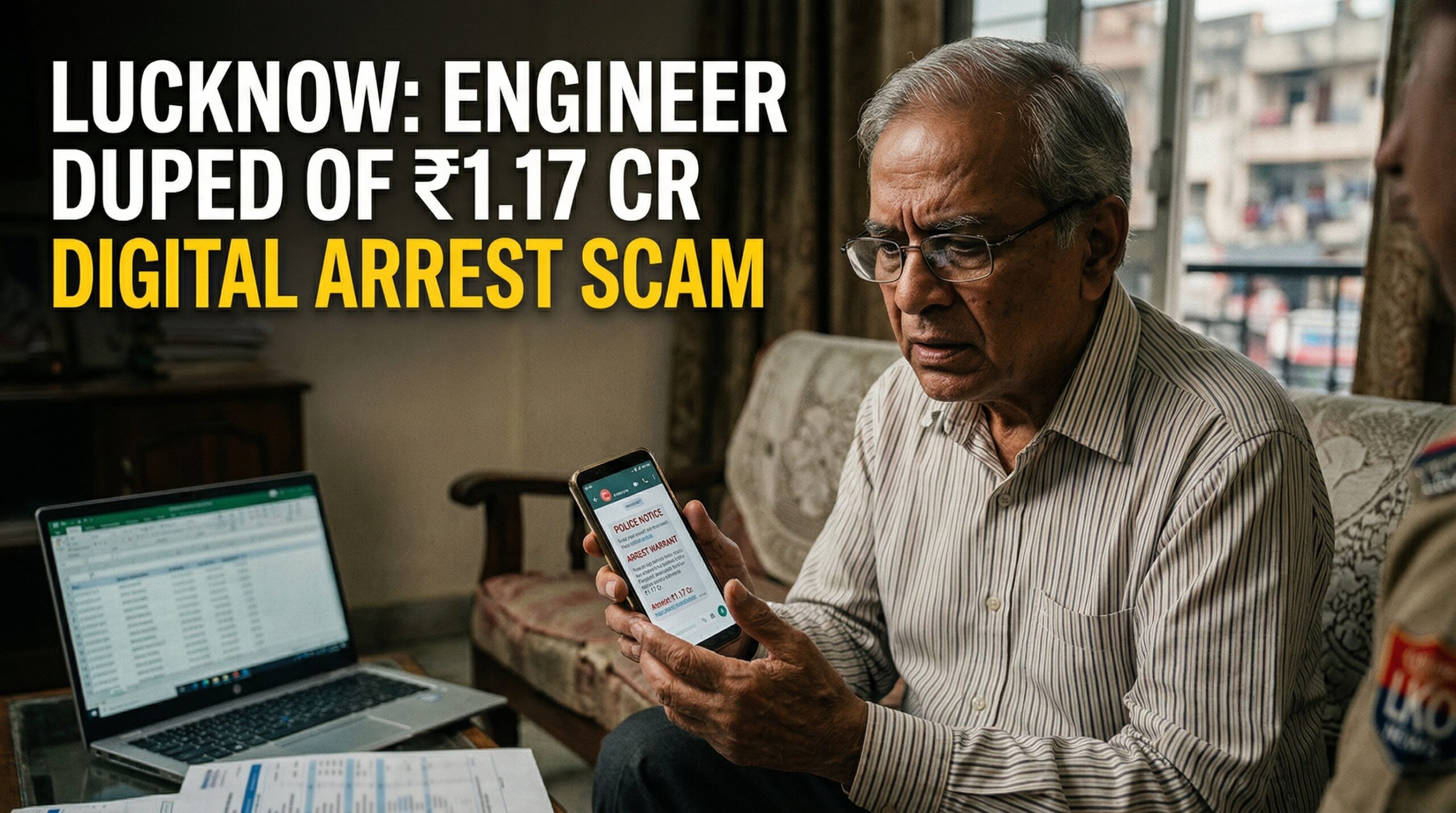
Background and Timeline: Reported on March 26, 2026, a 71-year-old retired electricity department engineer fell victim to a prolonged cyber-siege in Lucknow. The scam began on December 15, 2025, when the victim was first contacted, and lasted for several weeks. The case was officially registered at the cyber crime police station this week after the victim realized the legal threats were fraudulent.
Modus Operandi: Fraudsters posing as officials from TRAI, CBI, RBI, and the judiciary coerced the victim into a state of “digital arrest”. They claimed the victim was named in 17 money-laundering cases and provided a fake CBI complaint number to induce fear. The victim was instructed to call numbers purportedly linked to the Barakhamba Police Station and was forced to submit a written “declaration of innocence” via WhatsApp.
Victims and Financial Impact: The Kalyanpur resident lost a total of ₹1.17 crore over the two-month period of psychological coercion. The fraudsters extracted personal and financial details including Aadhaar numbers to systematically drain the victim’s life savings under the guise of “legal scrutiny”. This case represents one of the most high-value individual losses reported in Uttar Pradesh this year.
Investigation and Agencies Involved: Lucknow Cyber Crime Police are examining the bank transaction details and the WhatsApp call records used in the crime. They are tracking the multiple mobile numbers identifying themselves as “Sanjay Sharma” and other official personas. The investigation is focusing on the “Barakhamba Police Station” impersonation trail used to maintain the digital arrest.
Arrests and Suspects: No arrests have been made yet, as the suspects used multiple layers of forged credentials and encrypted communication. Investigators believe the module is linked to a professional syndicate that specializes in targeting high-net-worth retirees. Efforts are underway to trace the end-beneficiaries of the accounts where the ₹1.17 crore was transferred.
Broader Implications and Trends: This case highlights the “prolonged nature” of modern digital arrest scams, which can last for weeks rather than hours. It underscores the use of “multi-agency impersonation” to bypass the victim’s skepticism. Authorities reiterate that no government agency will ever conduct investigations or demand money transfers through phone or video calls.