
Background and Timeline
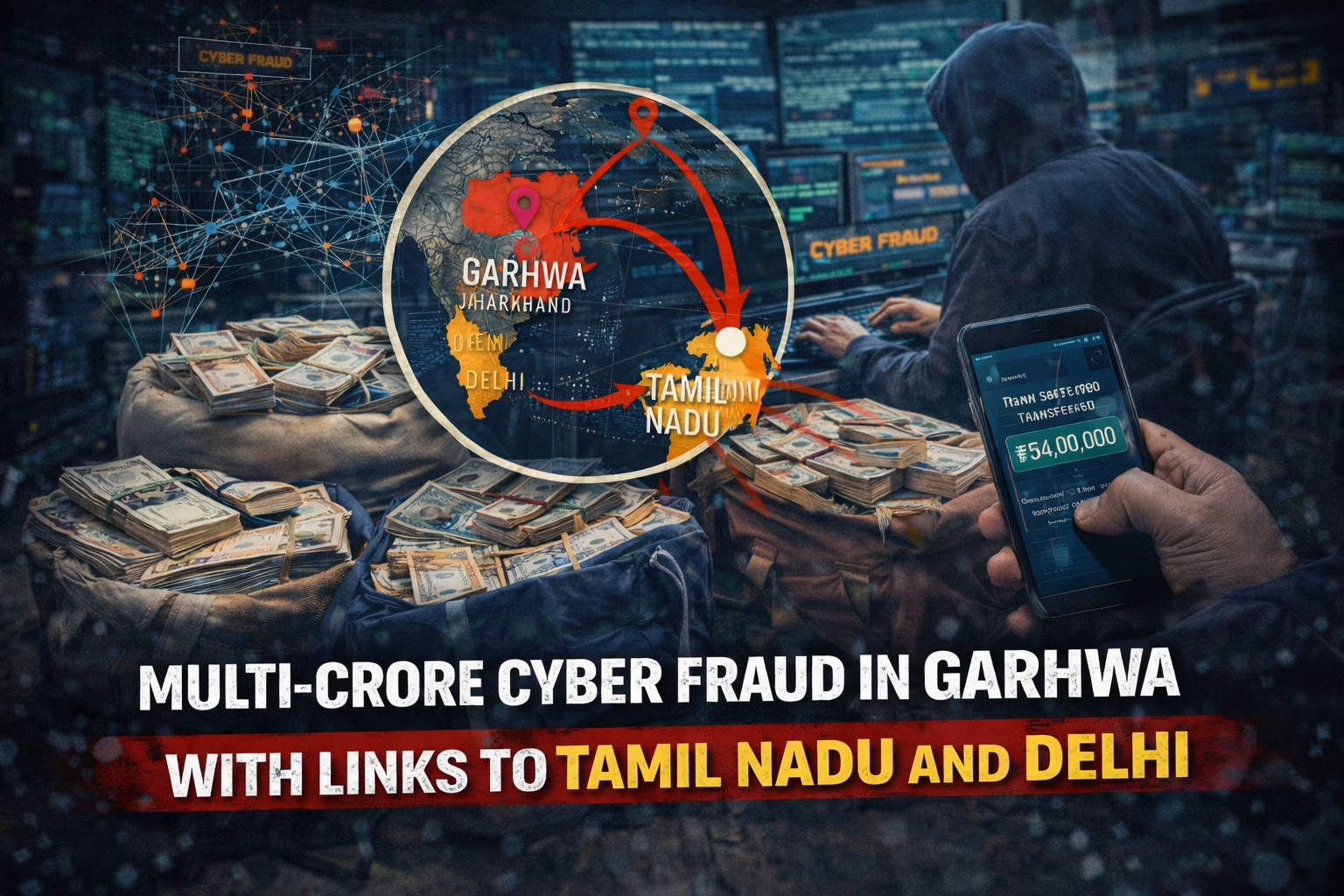
In January 2026, authorities in Garhwa district, Jharkhand, uncovered a multi-crore cyber fraud operation with suspected links to organized networks in Tamil Nadu and Delhi. The investigation began after banks reported unusual cash withdrawals and flagged several customer service point (CSP) accounts for suspicious activity.
Modus Operandi
The fraudsters exploited gaps in monitoring at CSPs—banking outlets that provide basic services in rural and semi-urban areas. A key suspect regularly visited multiple CSPs, using different identities and timings to initiate cash withdrawals by scanning barcodes or transferring funds from various accounts. The CSP operators, following standard procedures, provided cash in exchange for digital transfers, unaware that the funds originated from cyber frauds. The rapid movement of money through multiple accounts and the use of ever-changing identities allowed the operation to continue undetected for nearly a year.
Victims and Financial Impact
The operation involved the movement of crores of rupees, with a significant portion withdrawn in cash through Garhwa’s CSPs. Several CSP operators had their accounts frozen, affecting both their businesses and innocent customers whose accounts were caught in the dragnet. The full extent of victimization is still being assessed, but the case underscores the vulnerability of rural banking infrastructure to sophisticated fraud schemes.
Investigation and Agencies Involved
Police and cyber cell officials in Garhwa, with support from banking partners and I4C, are leading the investigation. The probe involves forensic analysis of transaction logs, interviews with CSP operators, and efforts to trace the broader network, including potential links to Tamil Nadu and Delhi. The arrest of a key suspect, facilitated by local villagers and CSP operators, is expected to yield further insights into the syndicate’s operations.
Arrests and Suspects
One primary suspect was apprehended after being recognized by a CSP operator and detained with the help of local residents. Police are interrogating the individual to uncover the full extent of the network and identify additional accomplices. CSP operators have maintained their innocence, asserting that they followed standard banking protocols and were unaware of the illicit origins of the funds.
Broader Implications and Trends
This case highlights the exploitation of CSPs and the challenges of monitoring high-volume, low-value transactions in decentralized banking environments. It also raises questions about the adequacy of KYC and transaction monitoring at the grassroots level. The incident has prompted calls for enhanced training, stricter oversight, and the deployment of advanced analytics to detect and prevent similar frauds in the future.