
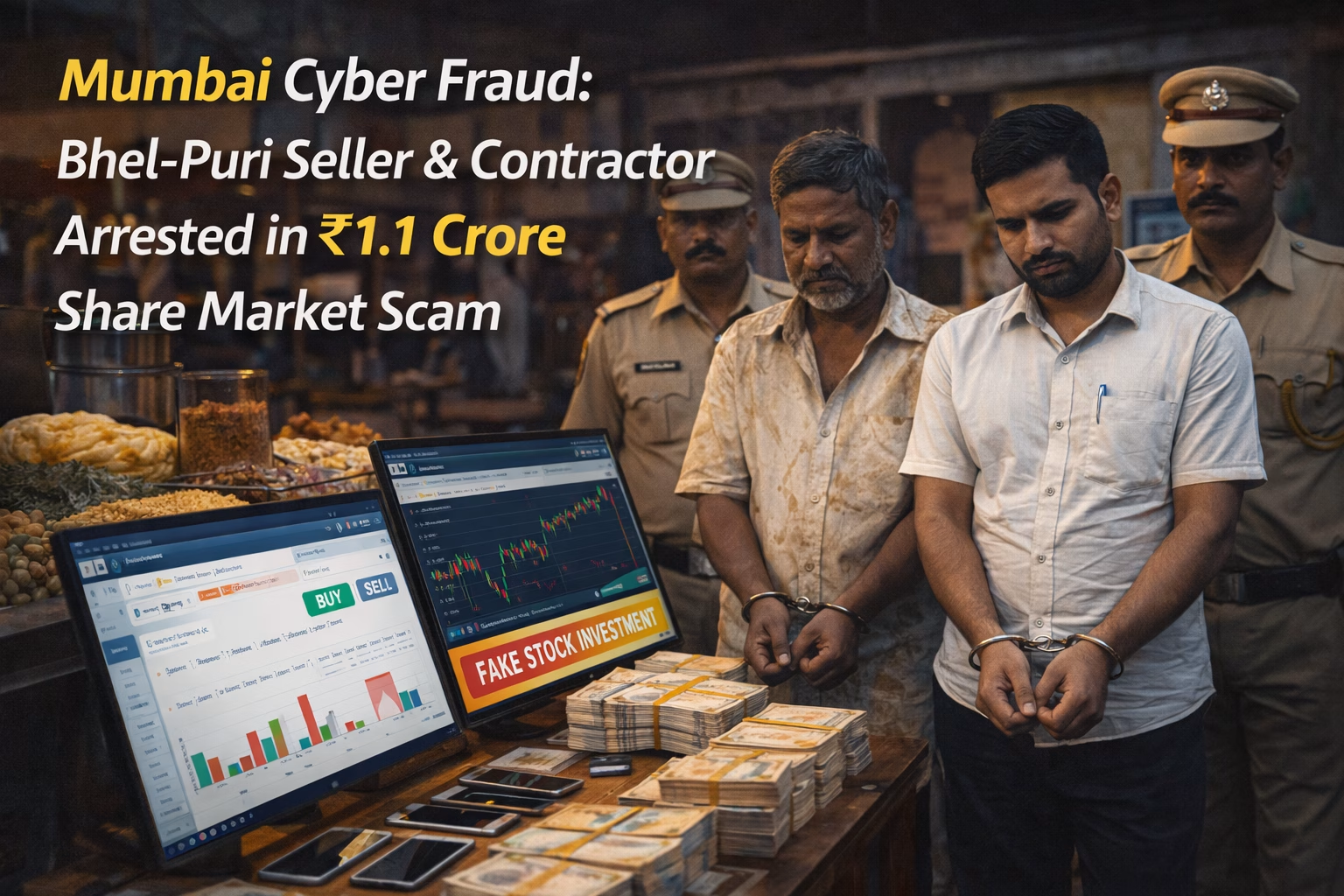
Background and Timeline: The Mumbai Crime Branch apprehended two suspects from Kolhapur, Maharashtra, on Sunday, January 25, 2026, in connection with a large-scale investment fraud . The investigation followed a complaint filed by a 70-year-old retired company director who realized he had been cheated after attempting to withdraw his purported profits in late 2025 . The case marks a significant breakthrough in tracking the “micro-nodes” of share market syndicates operating in Western India.
Modus Operandi: The victim was lured into a WhatsApp group where administrators impersonated registered investment experts and promised “SEBI-certified” high returns on stocks . He was instructed to download a virtual application that displayed fabricated profits reaching as high as ₹3.7 crore to induce continuous high-value deposits . The syndicate utilized a division of labor where a low-income individual provided the account while a more tech-savvy partner managed the digital transfers and layering .
Victims and Financial Impact: The retired director suffered a confirmed financial loss of ₹1.1 crore, which he transferred in multiple installments believing he was increasing his trading capital . Police discovered that the primary account used in this case had processed transactions totaling ₹3 crore within a single week . During the investigation, authorities froze over three dozen bank accounts and successfully blocked ₹30 lakh in remaining liquidity .
Investigation and Agencies Involved: A specialized team led by Senior Inspector Suvarna Shinde and Assistant Inspector Dr. Nitin Gacche conducted the financial audit . They utilized data from the NCRP to discover that the suspects’ account was already linked to 38 prior complaints across different states . The investigation involved tracing the digital footprint of the “virtual app” and coordinating with banks in Kolhapur to identify the actual account operators .
Arrests and Suspects: Two individuals were arrested: Dastagir Qazi (52), a bhel-puri seller who provided his personal account, and Chetan Padalkar (31), a civil contractor who operated the account for the syndicate . Qazi allegedly received ₹7 lakh from the victim’s siphoned funds as part of his commission for account usage . Both suspects are currently being interrogated to identify the masterminds who ran the fake WhatsApp investment community .
Broader Implications and Trends: The case uncovers the “mule economy” where individuals from varied economic backgrounds are recruited to weaponize their legitimate bank accounts . It serves as a reminder that even “SEBI-registered” claims on messaging apps must be verified through the official SEBI portal before any capital is committed. Mumbai police have warned that the rapid velocity of transactions in mule accounts is now a primary indicator used for real-time fraud detection.