
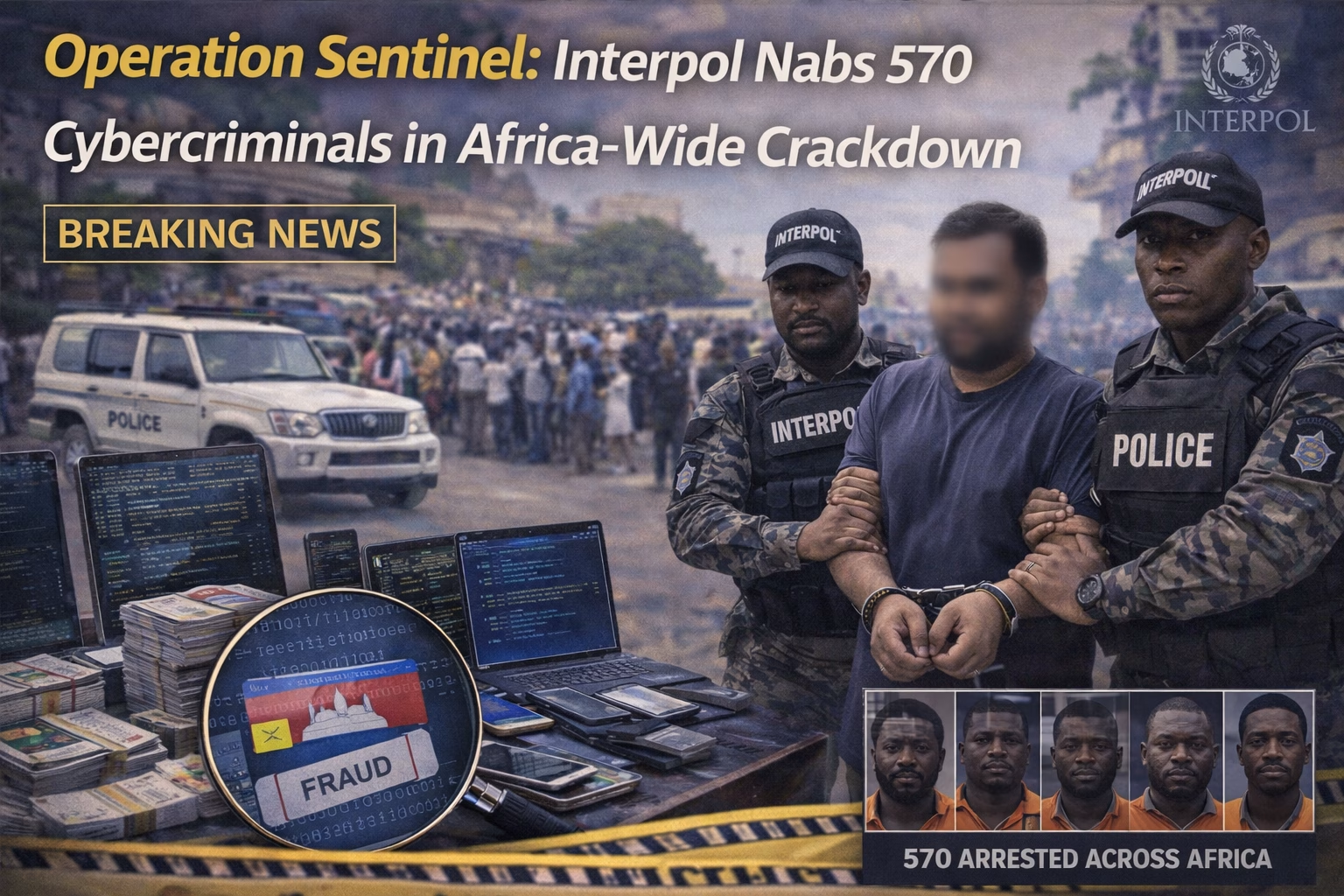
Background and Timeline: Interpol announced the final results of a month-long coordinated enforcement action, “Operation Sentinel,” on Tuesday, January 27, 2026. The operation, a critical pillar of the African Joint Operation Against Cybercrime, targeted transnational fraud syndicates operating across 19 countries. This strike marks a historic shift toward proactive, intelligence-led interventions to safeguard the digital economies of the Global South.
Modus Operandi: The operation targeted three primary threat vectors: business email compromise (BEC), digital extortion, and high-velocity ransomware. One major scheme in Senegal involved attackers infiltrating a petroleum company’s internal email system to authorize fraudulent wire transfers totaling $8 million. In Nigeria and Ghana, scammers utilized professionally designed websites and mobile apps to impersonate well-known global fast-food brands, collecting payments for orders that were never delivered.
Victims and Financial Impact: The global crackdown resulted in the arrest of exactly 570 suspects and the recovery of over $3 million in stolen digital funds. In Ghana, a single ransomware attack against a financial institution encrypted 100 terabytes of data, causing massive operational disruption and a theft of $120,000. authorities also identified over 6,000 malicious links and 4,318 social media accounts that were being used to conduct “pyramid-style” human trafficking and recruitment scams.
Investigation and Agencies Involved: Interpol’s Director of Cybercrime, Neal Jetton, coordinated the joint effort between 19 African nations and international partners from the UK and Germany. investigators utilized advanced malware analysis to identify the “DragonForce” and other ransomware strains, developing decryption tools to recover 30 terabytes of encrypted data. The operation also relied on “Roadside Check Forensics” in El Salvador and Morocco to identify potential traffickers using forged digital travel documents.
Arrests and Suspects: A total of 570 cybercriminals were arrested, including significant nodes in Benin (106 arrests) and Nigeria. The suspects included so-called “Yahoo Boys”—teenagers trained by organized syndicates to conduct WhatsApp-based romance and investment frauds. Nigerian authorities also apprehended key members of a darknet-based “Crypto Romance” ring that had duped thousands of victims globally through fabricated relationship personas.
Broader Implications and Trends: Operation Sentinel highlights the acceleration of cyberattacks targeting critical finance and energy sectors across the African continent. it reveals an emerging trend of “South American-Asian” trafficking modules operating in Africa, which contrasts with traditional trafficking patterns. Experts suggest that the outcome reflects a new level of commitment from Global South law enforcement agencies to work in close coordination to protect sensitive personal data and infrastructure.