
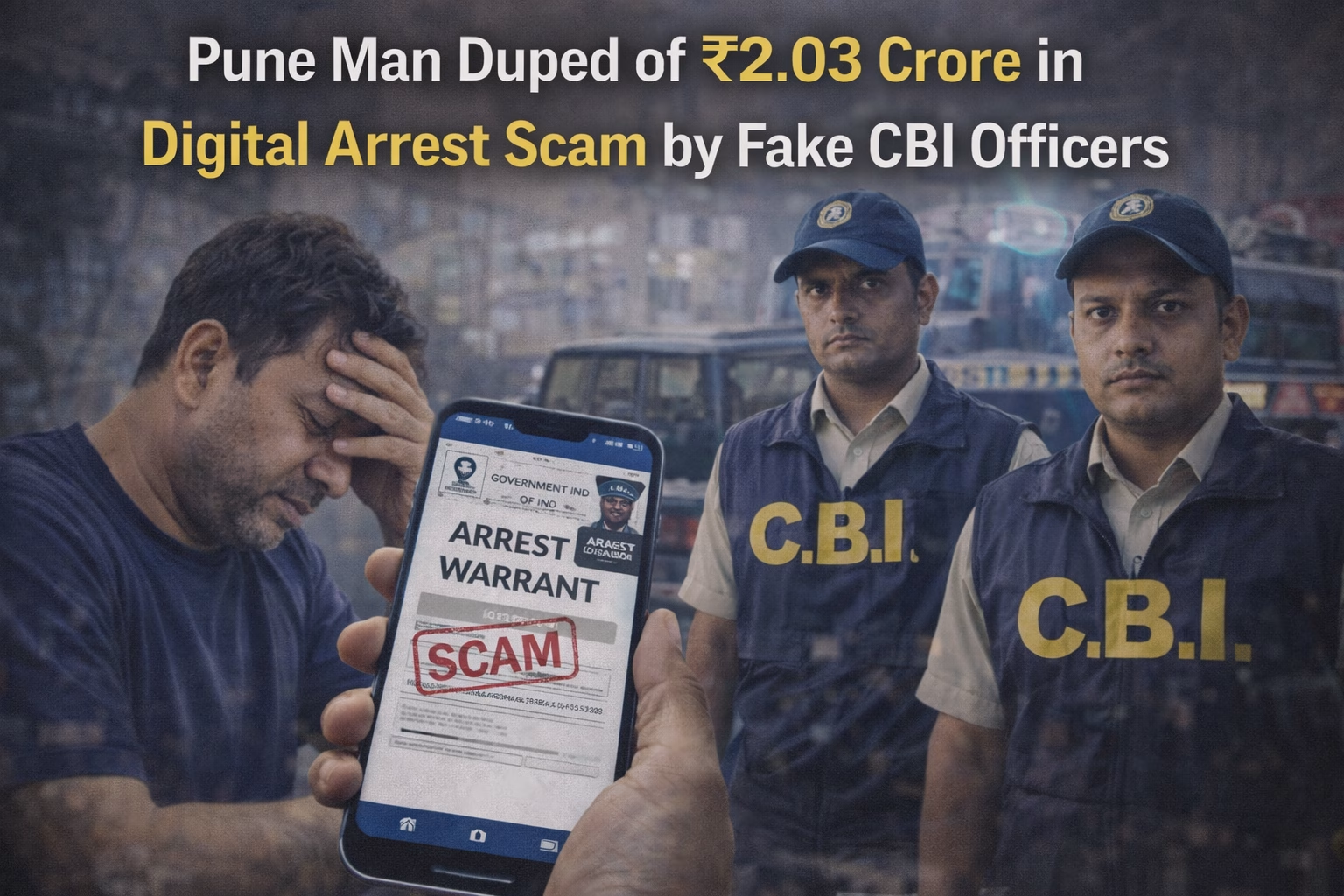
Background and Timeline: A 57-year-old resident of Pune was subjected to a harrowing six-month psychological ordeal that began in February 2025 and concluded in early 2026. Fraudsters posing as officials from the Central Bureau of Investigation (CBI) in Mumbai placed the victim under a “digital arrest.” The case only came to light recently after the victim finally approached the police once he realized the promised refund of his “verified” assets was never going to materialize.
Modus Operandi: The scammers claimed that a bank account in Mumbai had been opened using the victim’s documents and was found containing ₹60 lakh linked to illegal activities. They used constant video surveillance and threats of immediate detention to keep him isolated and forbidden from contacting family or legal counsel. To build legitimacy, they sent fake arrest warrants and persuaded him to transfer his entire life savings for “official verification purposes,” promising full returns after the probe.
Victims and Financial Impact: The victim suffered a life-altering financial loss of ₹2.03 crore, paid out in multiple transactions over a sustained period of six months. The scammers systematically drained his savings by maintaining a state of continuous fear and asserting that the situation was a matter of national security. The loss represents one of the largest individual digital arrest extortions reported in Pune, impacting both his personal and professional stability.
Investigation and Agencies Involved: The Pune Cyber Police Station is leading the investigation into the money trail, which is spread across dozens of beneficiary accounts in multiple states. Technical teams are analyzing the metadata of the video calls used to enforce the digital arrest and the origin of the forged CBI documentation. Investigators are coordinating with national agencies to trace if these calls were routed through international scam hubs in Cambodia or Thailand.
Arrests and Suspects: While no specific suspects have been named in the arrest phase of this report, police are tracing the owners of the mule bank accounts used for the ₹2.03 crore transfer. Investigators are focusing on a network of facilitators who provide “verification accounts” to international syndicates. Efforts are also underway to unmask the individuals who impersonated the high-ranking CBI officers during the sustained video surveillance.
Broader Implications and Trends: This case highlights a “long-duration” digital arrest model where fraudsters maintain control over a victim for months rather than days. It demonstrates the sophisticated use of forged judicial and investigative documents to create a pervasive “fear psychosis” in victims. Authorities have clarified that no legitimate agency conducts arrests via WhatsApp and have urged the public to immediately report any such video-based inquiries to the 1930 helpline.