
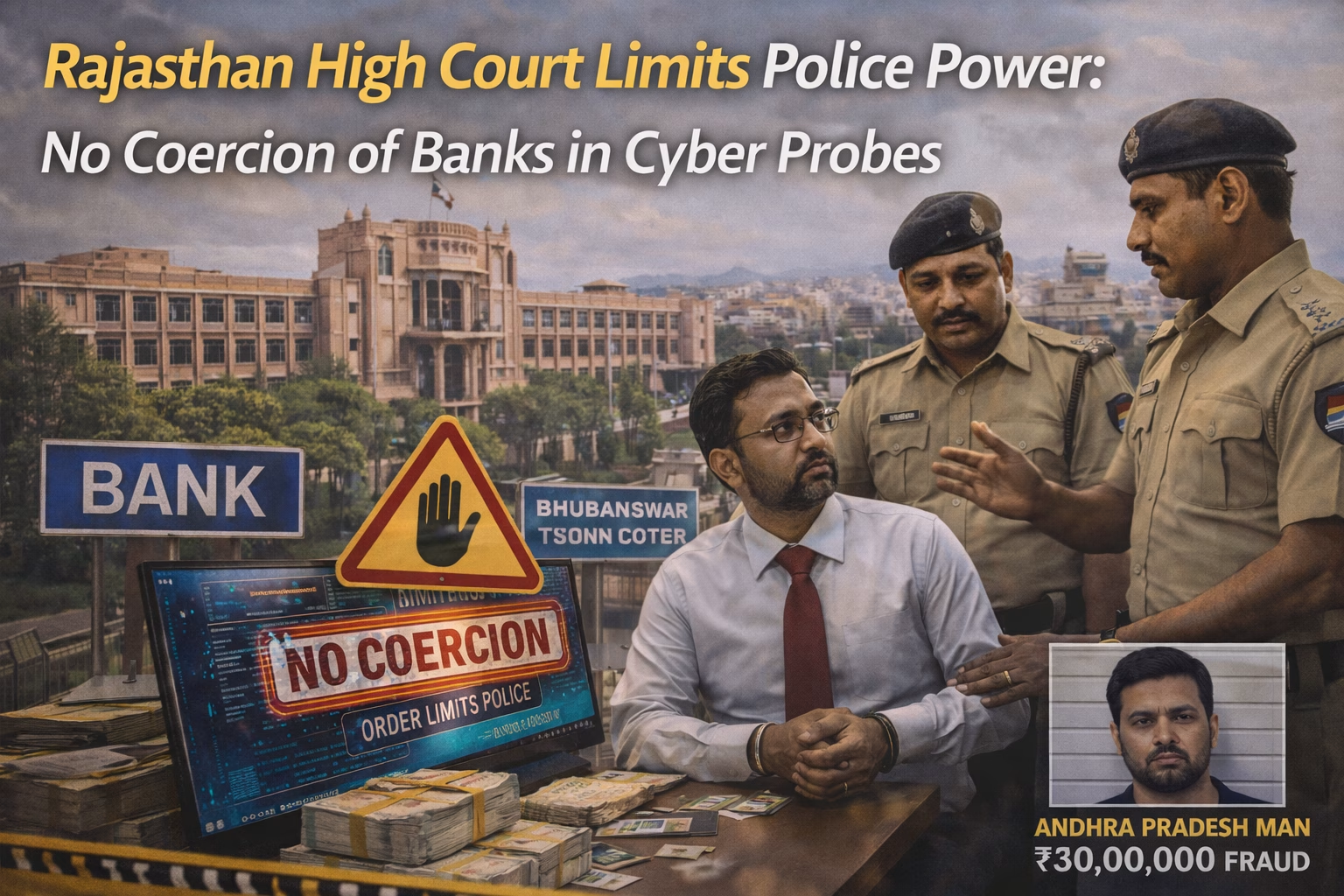
Background and Timeline: The Rajasthan High Court issued a landmark ruling on Tuesday, January 27, 2026, expressing serious concern over the “unbridled power” exercised by police in cybercrime investigations. Justice Ashok Kumar Jain passed a slew of directions aimed at protecting innocent citizens and entities from harassment during technical probes. The court emphasized that the role of law enforcement is limited to investigating suspected fraud in accordance with the law, not acting beyond it.
Modus Operandi: The court observed that police were increasingly exercising authority over stakeholders in the national digital ecosystem, including bullying citizens and third-party entities. Specifically, the ruling addressed the practice of coercing banks, financial institutions, and payment system operators (PSOs) to perform acts not mandated by law. The High Court noted that seeing a policeman often makes citizens feel nervous rather than safe due to these aggressive and unauthorized investigative tactics.
Victims and Financial Impact: While there is no direct financial loss to a single victim, the “unbridled power” has historically led to unwarranted account freezes and financial paralysis for legitimate businesses and individuals. Indiscriminate debit freezes, especially against entities without proven complicity, were characterized as “manifestly arbitrary” and as imposing punitive consequences without due process. The ruling seeks to prevent the multi-crore losses caused by the disruption of trade and livelihoods due to unauthorized police intervention.
Investigation and Agencies Involved: The Rajasthan High Court took up the matter after multiple petitions highlighted the harassment of innocent persons during cybercrime inquiries. Justice Ashok Kumar Jain provided clarity on the distinction between property seizure under Section 106 of the BNSS and the attaching of bank accounts under Section 107. The court’s directions serve as a mandate for the Rajasthan police and regional cyber units to follow strictly defined legal protocols during their financial audits.
Arrests and Suspects: N/A (This is a significant legal and judicial development). The ruling does not target specific suspects but rather reformulates the behavioral standards for the entire state investigative apparatus. The court clarified that the police have no role in bullying citizens or forcing payment aggregators to act in a particular manner during a probe. The directions are intended to ensure that the “majesty of the law” is maintained without violating fundamental rights.
Broader Implications and Trends: This ruling signals a critical judicial shift toward a more balanced approach to cyber policing, where the urgency of investigation does not override constitutional protections. It aligns with recent decisions from other high courts, such as the Delhi High Court, which ruled that police require specific Magistrate orders to freeze bank accounts. Experts believe this will lead to more professionalized, evidence-based “Scientific Policing” and reduce the administrative burden on innocent financial intermediaries.