
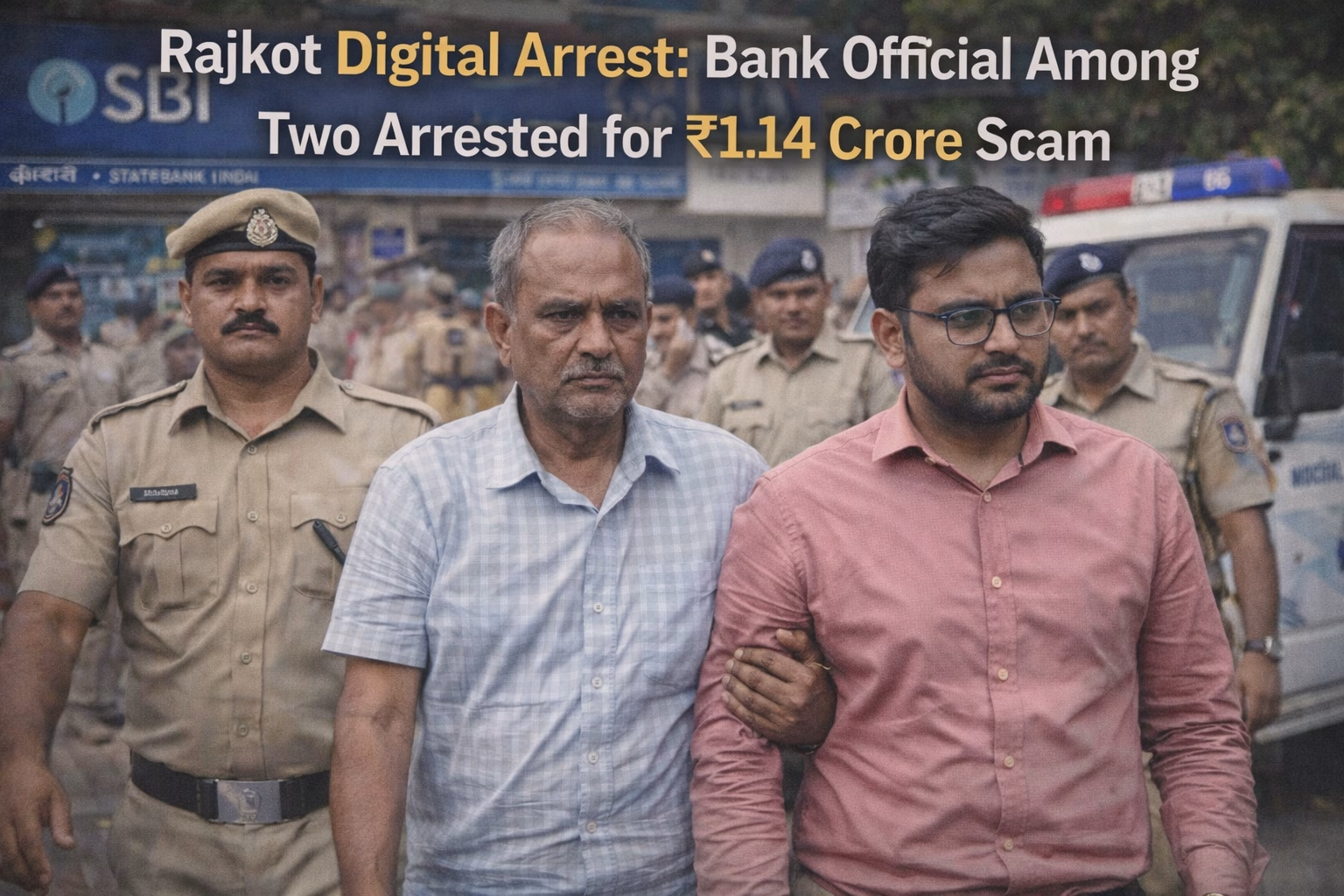
Background and Timeline: Rajkot police achieved a major breakthrough on Wednesday, January 28, 2026, with the arrest of two more key suspects in a multi-state cyber fraud case. The case involves a 76-year-old resident who was placed under a state of digital confinement in November last year after receiving a threatening call. These latest apprehensions bring the total number of individuals arrested in connection with this specific international racket to sixteen.
Modus Operandi: Fraudsters impersonating Mumbai Crime Branch officials utilized WhatsApp video calls to keep the victim “digitally arrested” for more than a week. They falsely accused the senior citizen of using his mobile number for cyberterrorism, child pornography, and online gambling to instill intense psychological fear. The syndicate further coerced the victim by threatening to send him to jail and forcibly bring back his daughters who are settled abroad.
Victims and Financial Impact: The elderly victim suffered a confirmed financial loss of ₹1.14 crore, which was siphoned through multiple transactions into various fraudulent accounts provided by the callers. The proceeds were rapidly withdrawn and layered through several secondary bank accounts to evade real-time freezing by authorities. One specific account in Haryana was found to have received approximately ₹1 crore of the stolen money directly before it was dispersed.
Investigation and Agencies Involved: The Rajkot Cyber Crime Police Station conducted an intensive interstate probe, tracking the technical trails of the video calls and the banking logistics. Following information gathered from previous arrests, a specialized team was dispatched to Karnal, Haryana, to nab the new suspects. The investigation is also looking into the internal banking protocols that were bypassed to open high-limit accounts for siphoning illicit funds.
Arrests and Suspects: Two individuals were arrested from Karnal city in Haryana: Shankar Rajput (27) and Shubham Raghuvirsinh (30). Shubham, who worked as a sales manager with a private bank, allegedly utilized his position to facilitate the opening of a mule account in Shankar’s name. This account was a critical node in the syndicate’s financial chain, used to receive and launder nearly the entire amount cheated from the Rajkot resident.
Broader Implications and Trends: The involvement of a professional bank employee as a “mule aggregator” reveals a dangerous level of institutional penetration by cyber syndicates. This case underscores the Supreme Court’s concerns regarding the “laxity” of financial institutions and the potential for fixing liability for “deficiency of service”. It also emphasizes that senior citizens remain the primary targets for high-value extortions involving national security and child pornography narratives.