
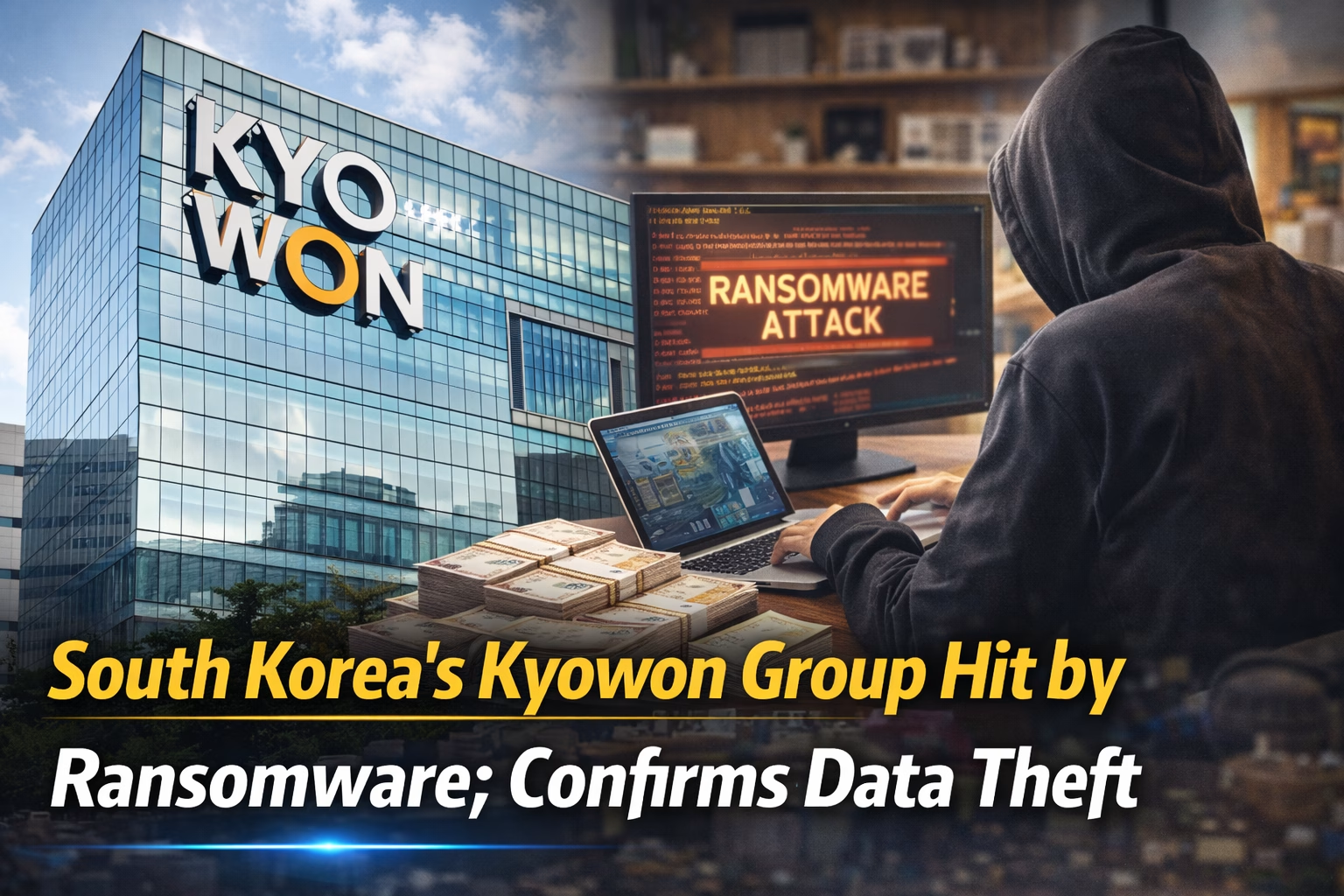
Background and Timeline: South Korean education and lifestyle conglomerate Kyowon Group publicly confirmed a major ransomware attack in early January 2026. The incident was first detected as abnormal activity at 8:00 a.m. on Saturday, January 10, leading to immediate system paralysis across multiple subsidiaries. By January 14, the company and the Korea Internet & Security Agency (KISA) confirmed that a significant data exfiltration had occurred during the breach.
Modus Operandi: Attackers infiltrated the network through an “externally exposed server” and achieved extensive lateral movement within the group’s infrastructure. Approximately 600 of the group’s 800 servers were compromised, paralyzing digital services for subsidiaries including Kyowon Kumon, Red Pen, and Kyowon Healthcare. Threat actors exfiltrated confidential data before deploying ransomware to encrypt critical databases and disrupt operations.
Victims and Financial Impact: Authorities estimate that up to 9.6 million user accounts—corresponding to roughly 5.54 million unique individuals—were affected by the data theft. The breach impacted families across South Korea, potentially exposing children’s learning histories, parental payment details, and travel information. This incident is part of a larger wave of attacks on Korean giants like Coupang, which affected 33.7 million customers in late 2025.
Investigation and Agencies Involved: KISA and local law enforcement are conducting a joint government-led probe into the exfiltration path and the scale of personal data exposure. Kyowon Group is working with external cybersecurity experts to analyze the cause and has disconnected all affected servers to contain further damage. The investigation is specifically looking for evidence of lateral movement via “Pass the Hash” and remote service protocols.
Arrests and Suspects: As of mid-January 2026, no specific ransomware group or threat actor has claimed responsibility for the attack. The absence of a public ransom note or technical artifacts means that attribution remains speculative, though it fits the pattern of recent large-scale campaigns targeting South Korean firms. Investigators are analyzing command-and-control (C2) channels to identify the origin of the intrusion.
Broader Implications and Trends: The breach has triggered a “Security-as-Governance” shift in South Korea, with mid-tier firms like Coway moving cybersecurity oversight directly to the CEO’s office. It highlights a systemic exposure where interconnected service economies allow a single entry point to compromise data across education, healthcare, and retail. The attack serves as a critical warning that digital growth cannot survive without a corresponding investment in trust and infrastructure.