
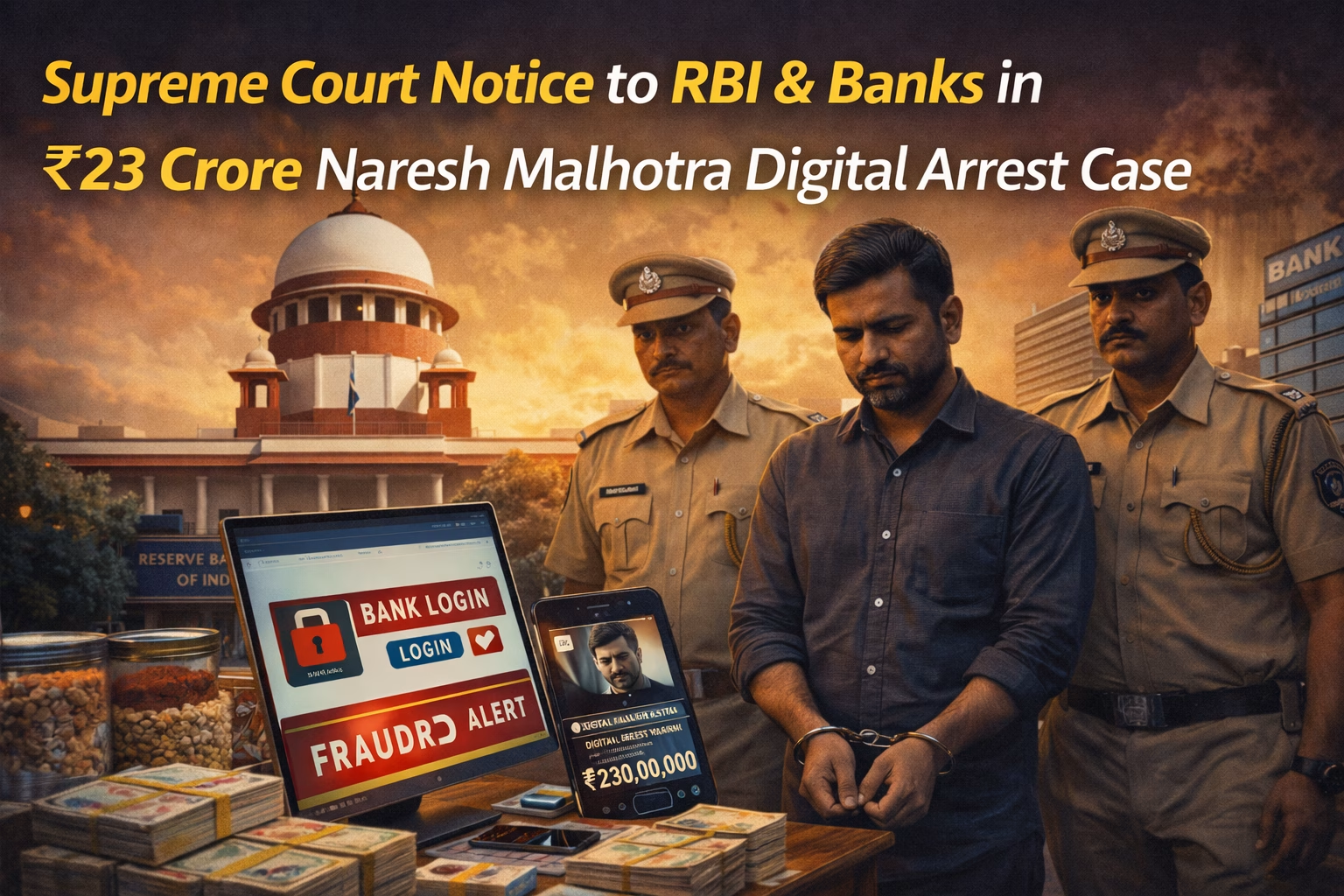
Background and Timeline: In a major legal development on Sunday, January 25, 2026, the Supreme Court of India took up a petition regarding one of the largest individual digital frauds in the nation’s history. The case involves 82-year-old Naresh Malhotra, a retired banker from South Delhi, who was defrauded of a staggering ₹22.92 crore. The ordeal took place over a month-long period in late 2025, during which the victim was kept under a state of constant psychological siege.
Modus Operandi: Fraudsters impersonating Enforcement Directorate (ED) and Mumbai Police officials convinced Malhotra that his Aadhaar card was linked to a narcotics racket and terror funding for the Pulwama attack. He was placed under a “digital arrest” inside his Gulmohar Park residence, monitored via video calls, and threatened with property seizure if he contacted family. The scammers coerced him into making 4,236 separate transactions into 16 different accounts to “verify” his assets.
Victims and Financial Impact: The 82-year-old victim lost exactly ₹22,92,00,000, representing his total lifetime savings and retirement corpus. The sheer volume of transactions—over 4,000 within a month—indicates a catastrophic failure in the automated fraud monitoring systems of the involved banks. The Delhi Police IFSO unit managed to freeze only ₹12.11 crore of the cheated amount, leaving nearly ₹11 crore siphoned by the syndicate.
Investigation and Agencies Involved: A Supreme Court bench comprising Chief Justice Surya Kant and Justice Joymalya Bagchi issued formal notices to the Union Government, CBI, RBI, and seven private banks including HDFC, ICICI, and Kotak Mahindra. Amicus curiae N.S. Nappinai is assisting the court in establishing a “Duty of Care” framework for financial intermediaries. An inter-departmental committee including MeitY and DoT has been formed to recommend systemic legal reforms based on this case.
Arrests and Suspects: While no specific kingpins were named in the Supreme Court notice, the CBI is currently investigating the cross-border links of the syndicate to Southeast Asian “scam compounds”. The petition names the banks as parties for their alleged gross negligence in allowing such a high volume of suspicious activity without intervention. Police are tracking the 16 bank accounts used in the siphoning, which are believed to be high-limit corporate mule accounts.
Broader Implications and Trends: This case is set to establish a legal precedent where banks may be held financially liable for a “Deficiency of Service” if they fail to flag unusual transaction patterns from vulnerable senior citizens. It underscores that “digital arrest” is not just a technical fraud but a direct assault on the majesty of the judiciary through the forgery of court orders. The Supreme Court has directed all states to strengthen regional cyber units to ensure a coordinated national defense against such massive extortions.