
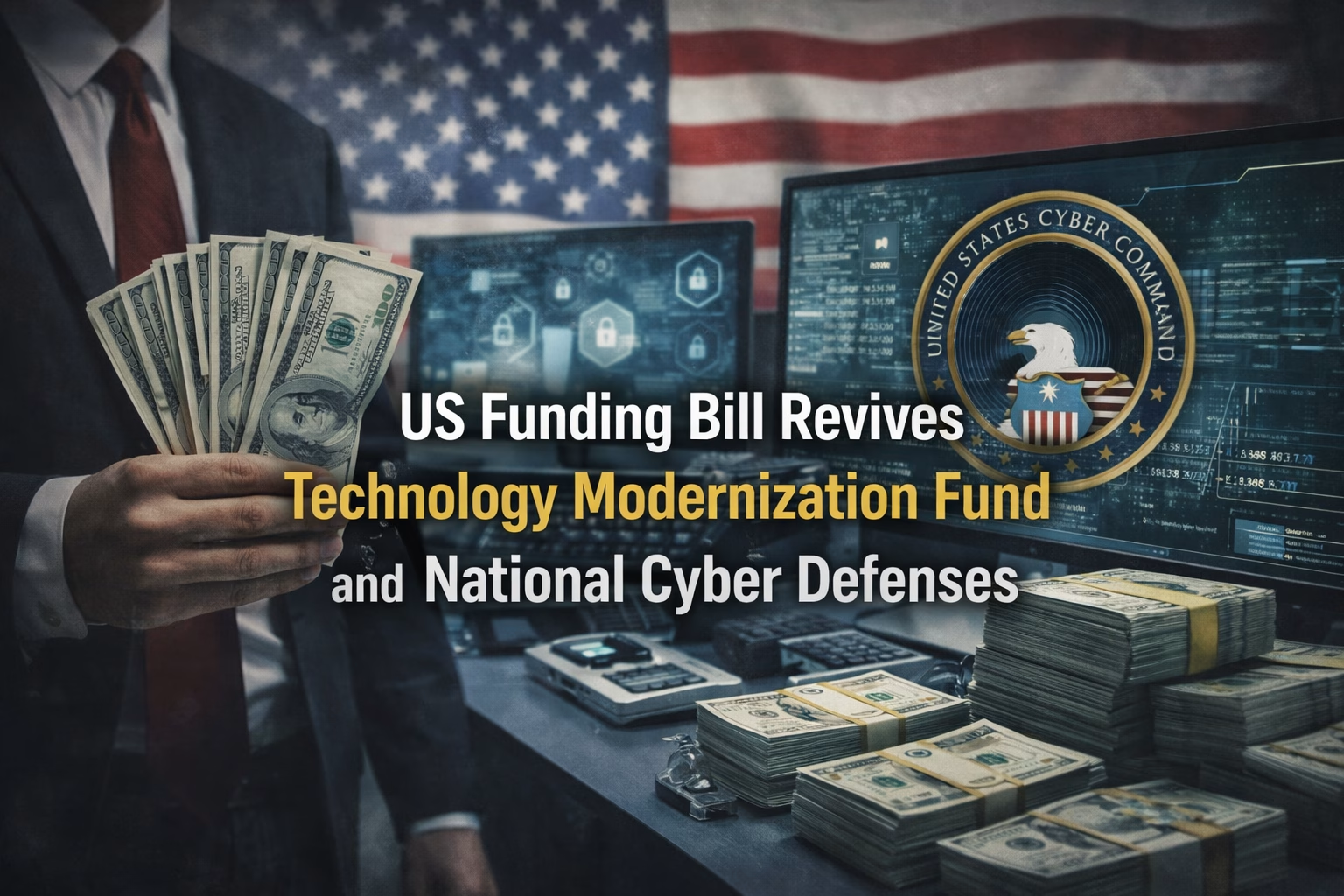
Background and Timeline: The US government released a $1.2 trillion funding package on the morning of Tuesday, January 20, 2026, which extends several critical cybersecurity programs. The legislation provides a necessary extension for the Technology Modernization Fund (TMF), which had effectively lapsed in December after Congress failed to reauthorize its funding vehicle. This minibus bill ensures that federal agencies can continue their modernization efforts through the end of the 2026 fiscal year in September.
Modus Operandi: The TMF functions as a self-replenishing working capital fund designed to provide agencies with initial capital for multi-year IT and security upgrades. Beyond funding, the deal extends the 2015 Cybersecurity Information Sharing Act, which provides legal protections for private sector firms sharing threat intelligence with the FBI and NSA. The legislation also applies the extension timeline to the National Cybersecurity Protection System, an intrusion detection framework that monitors federal network traffic for potential hackers.
Victims and Financial Impact: The lapse of the TMF in December had frozen nearly $200 million in available funds, stalling high-impact projects intended to move legacy platforms to the cloud. The new package provides an additional $5 million plus-up for the TMF and allocates a substantial $2.6 billion budget for the Cybersecurity and Infrastructure Security Agency (CISA). These funds are vital for maintaining sufficient staffing levels and preventing the loss of critical modernization momentum in a hazardous threat environment.
Investigation and Agencies Involved: Congressional appropriators from the House and Senate reconciled the details of the three-bill minibus to avoid another government shutdown deadline on January 30. The General Services Administration (GSA) will manage the resumed TMF investments, prioritizing projects that strengthen national security and taxpayer efficiency. The funding also reinstates $39.6 million for election-related cybersecurity support, including regional advisers to protect the integrity of the voting process.
Arrests and Suspects: N/A (This is a policy and national security funding item). The package focuses on fortifying the government’s IT infrastructure against state-sponsored and opportunistic cyber threats. However, the bill includes an extension of the State and Local Cybersecurity Grant Program, a $1 billion initiative used by municipal governments to harden their defenses against ransomware gangs. Authorities have emphasized that consistent funding is the first line of defense for both federal and local systems.
Broader Implications and Trends: The reauthorization sends a clear signal that the federal government remains committed to evolving its technology to meet modern AI-driven threats. It buys time for lawmakers to negotiate longer-term permanent authorizations while providing agencies with the certainty needed for long-term strategic planning. As corporate security becomes increasingly intertwined with national security, these programs provide the essential framework for a coordinated and resilient digital economy.