
Background and Timeline
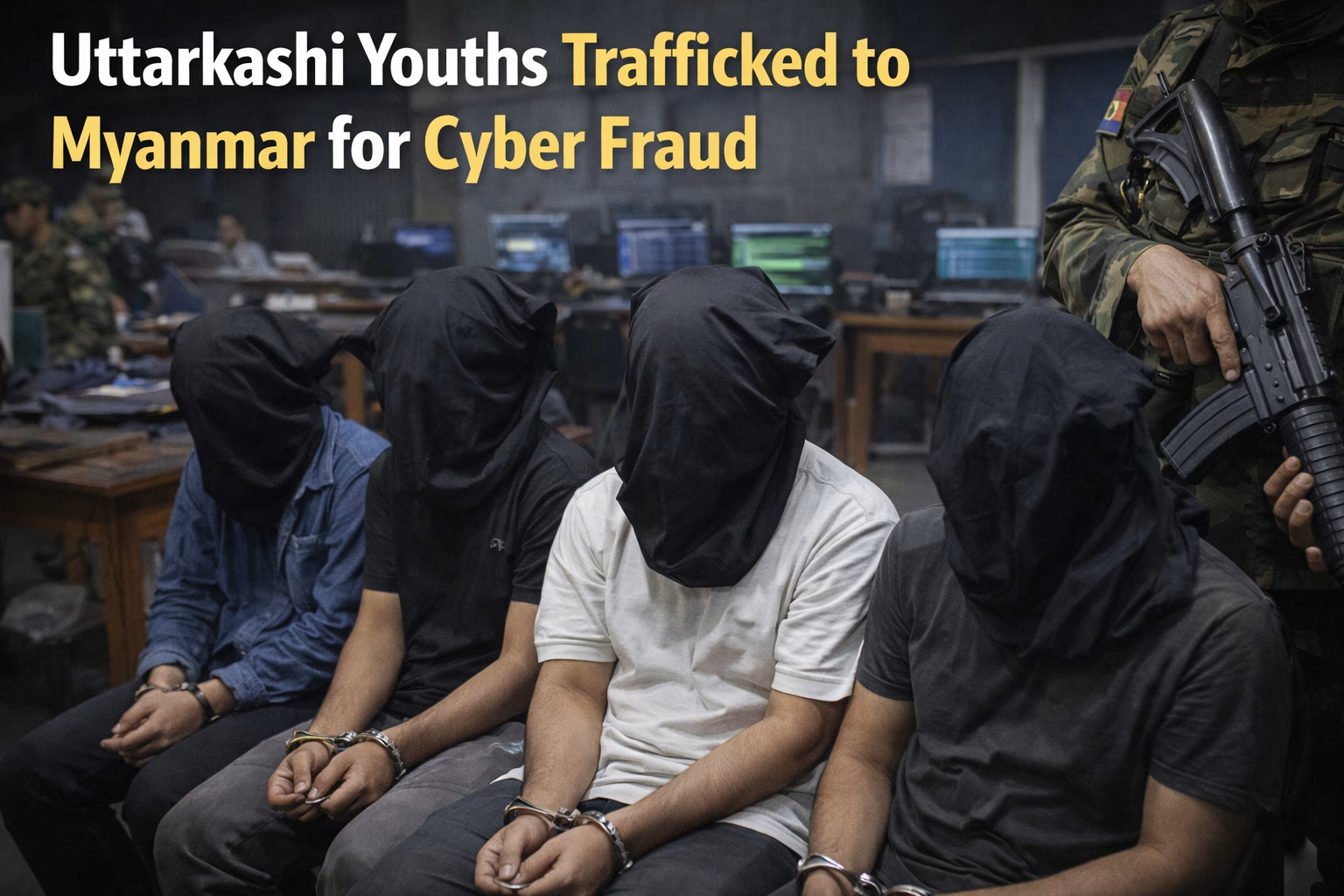
In June 2025, two young men from Uttarkashi, Uttarakhand, were lured with promises of overseas employment, only to be trafficked to Myanmar and forced to participate in cyber fraud operations. The ordeal came to light in January 2026, when one of the victims, Yashpal Bisht, filed a complaint with the state cybercrime police after escaping and returning to India with the help of an NGO and the Indian embassy.
Modus Operandi
The trafficking network operated under the guise of job placement. The victims were contacted by Keshav Biljwan, who arranged a fake online interview and demanded ₹13,000 for airfare. After arriving in Bangkok, they were taken through illegal routes into Myanmar, where they were confined in a scam center run by Chinese nationals. The victims were trained to create fake Facebook accounts and engage in online fraud. When they resisted, they were threatened, harassed, and confined. The chaos of local armed conflict allowed them to escape and seek help from an NGO, eventually leading to their repatriation.
Victim Impact and Financial Losses
The victims endured physical and psychological abuse, forced labor, and confinement. While the financial losses primarily affected the scam center’s targets, the personal toll on the trafficked youths was severe. The case is part of a broader pattern of human trafficking for cybercrime in Southeast Asia, with thousands of victims from India and other countries forced to work in scam compounds.
Investigation and Agencies Involved
The Uttarakhand state cybercrime police registered a case against Keshav Biljwan and Shivam under BNS sections for organized crime, wrongful confinement, and human trafficking, as well as relevant sections of the IT Act. The investigation is ongoing, with efforts to dismantle the recruitment network and trace the international syndicate operating from Myanmar.
Arrests and Legal Provisions
As of the latest updates, the main accused remain at large, but the case is being actively pursued. The legal framework includes BNS provisions for organized crime and human trafficking, as well as IT Act offences related to cyber fraud.
Broader Implications and Trends
This case is emblematic of the growing nexus between human trafficking and cybercrime in Southeast Asia. Scam centers in Myanmar, Cambodia, and neighboring countries exploit trafficked labor to run large-scale digital fraud operations targeting victims worldwide. The case highlights the need for international cooperation, victim support, and stringent regulation of overseas job placement agencies.