
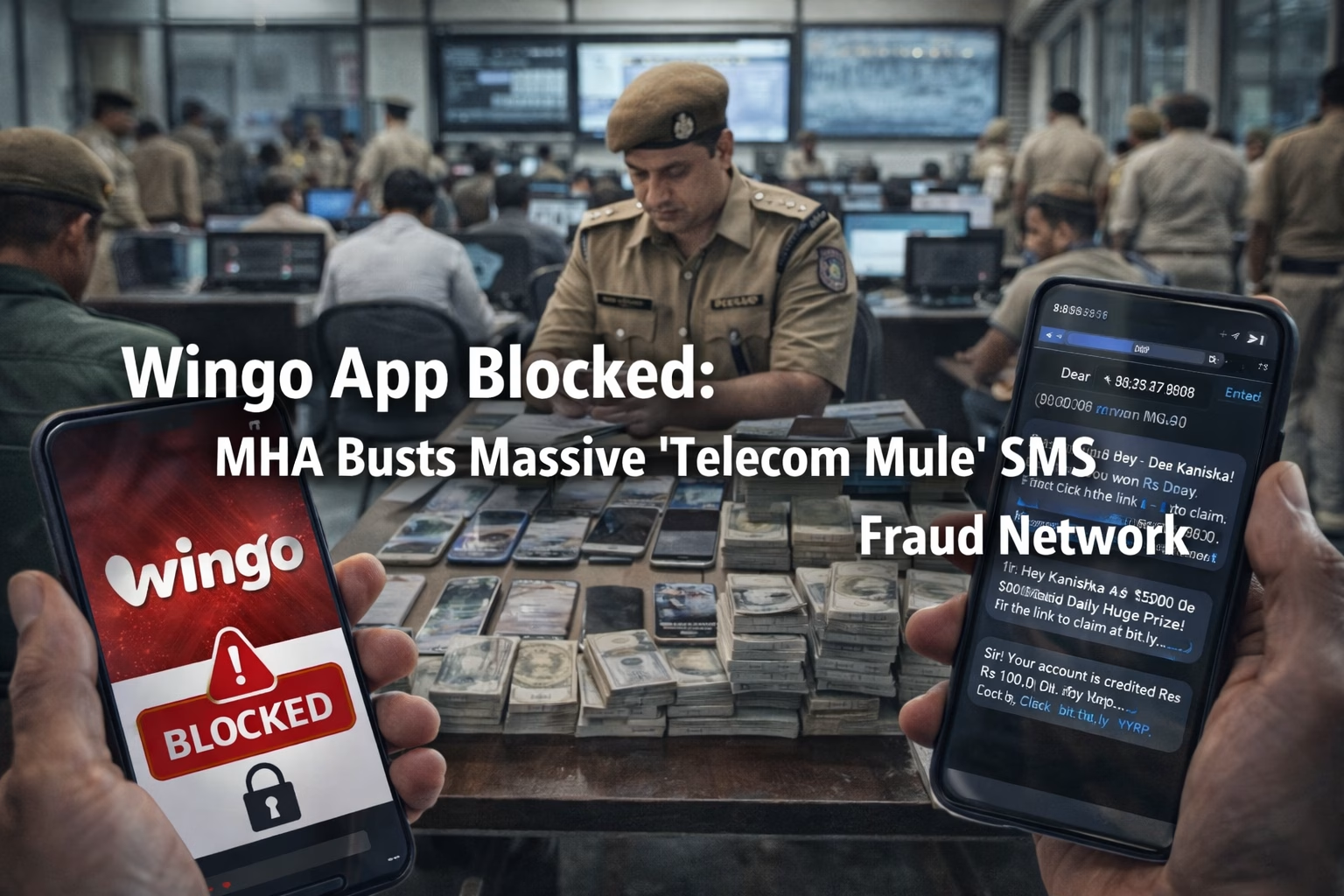
Background and Timeline: The Union Home Ministry and the Indian Cyber Crime Coordination Centre (I4C) executed a major technical blockade against the “Wingo” application on Friday, January 30, 2026. The action was taken after a surge in complaints linked to an organized SMS-based fraud network that had expanded its footprint across multiple Indian states. This operation represents a proactive strike against the technical infrastructure used to power thousands of localized cybercrimes.
Modus Operandi: The Wingo app functioned as a “Telecom Mule as a Service” platform, luring users with promises of small daily earnings for completing simple “SMS tasks.” Once a user installed the Android application, it secretly activated a mule infrastructure that used the victim’s own mobile phone and SIM card to send thousands of fraudulent messages to others. These messages often contained phishing links, investment traps, or digital arrest threats, making the user an unintentional accomplice in organized crime.
Victims and Financial Impact: Over 1.53 lakh Indian users were lured into the network by micro-payments, resulting in fraudulent messages reaching an estimated 1.53 crore people every single day. The financial damage caused by these secondary scams is estimated to be in the crores, as the Wingo infrastructure provided a “domestic cloak” for international fraudsters. The siphoning of telecom resources also caused users’ numbers to be flagged or blocked by service providers for suspicious activity.
Investigation and Agencies Involved: The I4C coordinated the investigation, utilizing technical logs to identify the command-and-control servers directing the Wingo network’s automated messaging. Following the probe, the government geo-blocked the app’s primary servers and successfully took down four Telegram channels with over 1.53 lakh subscribers used for coordination. Additionally, over 50 YouTube videos that were actively promoting the application as a legitimate earning tool have been removed.
Arrests and Suspects: While the app has been blocked, the MHA is currently tracing the primary developers and administrators of the Wingo ecosystem, who are suspected of operating from a decentralized base. Investigators are analyzing the payment gateways used to distribute the “task earnings” to identify the domestic nodes of the syndicate. Authorities have issued a fresh advisory for Android users to refrain from downloading any apps that offer money in exchange for SMS permissions.
Broader Implications and Trends: This case exposes the “Industrialization of Mules” where criminals no longer rely solely on bank accounts but are now weaponizing the telecom identities of thousands of citizens at once. It underscores the critical role of the I4C in monitoring “passive participation” apps that exploit the gig economy to build criminal infrastructure. The blockade serves as a warning that any platform offering earnings through automated messaging tasks is likely a telecom mule service.