

Published July 1, 2026 · 6 min read · Kerala
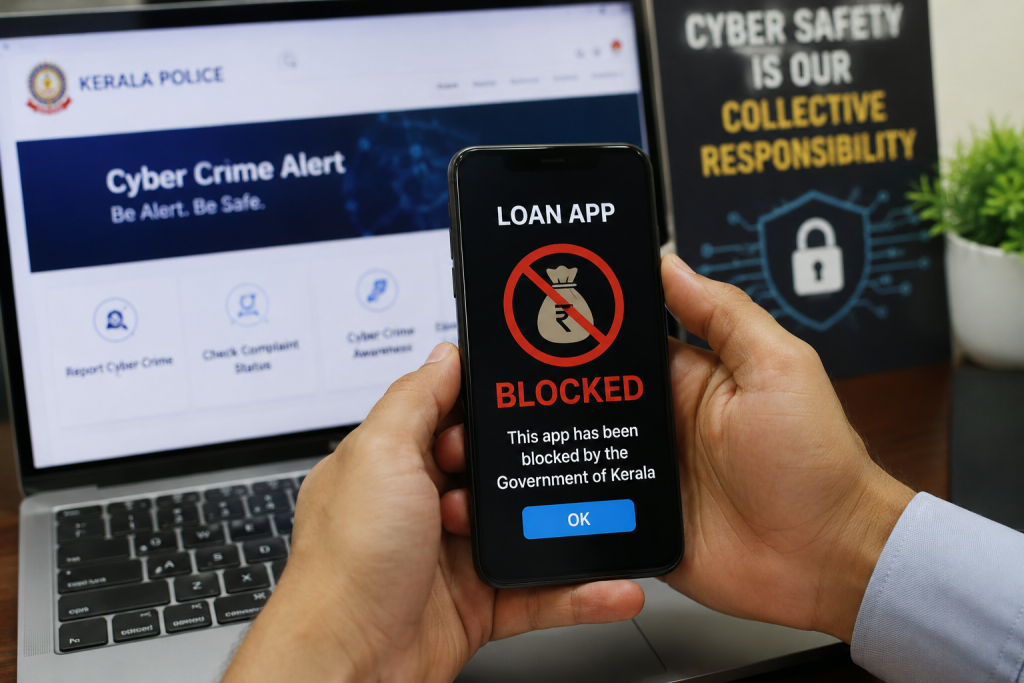
Nearly 2,000 illegal loan apps and over 5,000 fraudulent websites, gone in one coordinated sweep. Kerala’s latest cybercrime crackdown is one of the largest infrastructure-focused actions seen in the state so far — and it signals a broader shift from chasing individual scammers to dismantling the platforms that make fraud possible at scale.
1,836Loan apps blocked
5,000+Fake websites removed
KeralaState-wide action
AssemblyWhere it was announced
What Happened
Kerala Home Minister Ramesh Chennithala announced on Tuesday that state police have blocked nearly 1,836 illegal loan apps and removed more than 5,000 fraudulent websites as part of a sustained crackdown on cyber-enabled financial fraud. Chennithala said the government was treating the issue seriously and is now preparing a comprehensive project aimed at both tackling existing cybercrime and preventing new fraud before it takes hold.
The minister’s statement came in response to a submission in the state Assembly regarding the rising tide of cybercrime and online fraud in Kerala — indicating that the issue has moved from a policing concern to a matter of active legislative and public attention.
Why Illegal Loan Apps Are Such a Problem
Illegal or unregulated loan apps have become one of the most damaging categories of digital fraud in India over the past few years, precisely because they exploit genuine financial need rather than greed. Unlike investment scams that lure people with promises of unrealistic profits, loan app fraud targets people who are often already in financial distress and looking for quick, low-hassle credit.
How Illegal Loan Apps Typically Operate
- Easy approval, minimal checks: These apps advertise instant loans with little to no documentation, appealing especially to people who might not qualify for credit through regulated banks or NBFCs.
- Excessive permissions: During installation, the apps often request access to contacts, photos, and messages — far beyond what a legitimate lending process would ever require.
- Hidden charges and inflated interest: Borrowers frequently discover that the actual amount disbursed is lower than promised, while processing fees and interest rates are far higher than disclosed upfront.
- Harassment-based recovery: When repayment is due, some of these operations resort to harassment — using the harvested contact lists to shame borrowers by contacting their friends and family, or sending threatening messages.
- Data misuse: Beyond the loan itself, the personal data and contacts harvested during installation can be resold or used for further scams.
Loan app fraud is unusual among cybercrimes because the victim often knowingly downloads the app — the deception isn’t in getting them to install it, but in what happens after they do.
The Scale of the Fake Website Problem
The removal of more than 5,000 fake websites points to a parallel problem: fraudulent sites impersonating banks, government services, shopping portals, and other trusted platforms to harvest credentials or payments. At this scale, it’s unlikely these sites were built and maintained manually one at a time — numbers like this typically point to templated, semi-automated fraud infrastructure, where a single operation can spin up large numbers of near-identical fake sites quickly, and simply replace them once one gets blocked or reported.
This is precisely why blocking action at this scale matters more than isolated takedowns: a state response that only removes a handful of sites at a time barely dents an operation capable of generating thousands. Kerala’s numbers suggest police are beginning to match the fraud economy’s own scale of operation.
Why This Matters Beyond Kerala
This action reflects a broader and increasingly important shift in how Indian states are approaching cybercrime: moving from reactive, case-by-case investigation toward proactive infrastructure disruption. Blocking a fraudulent app or website before it claims more victims is fundamentally more efficient than investigating losses after the fact, since a single blocked app or site can prevent harm to potentially thousands of future victims at once.
Chennithala’s mention of a “comprehensive project” to prevent, not just respond to, cybercrime also suggests Kerala may be moving toward more permanent institutional capacity for this kind of work, rather than treating large-scale blocking exercises as one-off events. Given how quickly fraudulent apps and sites can be recreated once shut down, sustained infrastructure — not periodic sweeps — is likely what will determine whether numbers like these actually translate into lower fraud rates over time.
The bigger pattern: Kerala’s move mirrors a wider national trend of states shifting cybercrime enforcement upstream — targeting the apps, websites, and financial rails that enable fraud at scale, rather than only pursuing individual fraudsters after victims have already lost money.
How to Protect Yourself From Loan App and Fake Website Fraud
- Only use loan apps and lenders registered with or regulated by the RBI; verify an NBFC’s registration on the RBI’s official website before borrowing.
- Be wary of any loan app offering instant approval with little to no documentation — legitimate lenders are required to verify income and creditworthiness.
- Check app permissions before installing — a loan app asking for access to your contacts, photos, or call logs is a major red flag.
- Always type a bank’s or service’s URL directly rather than clicking links from SMS or WhatsApp messages, to avoid landing on fake lookalike websites.
- If you’re facing harassment from a loan app after borrowing, report it immediately to the Cyber Crime helpline (1930) or via cybercrime.gov.in — you are not alone, and this is a recognized, prosecutable crime.
Based on public statements by Kerala Home Minister Ramesh Chennithala in the state Assembly. This report is for informational purposes; details may be updated as the government’s cybercrime project progresses.